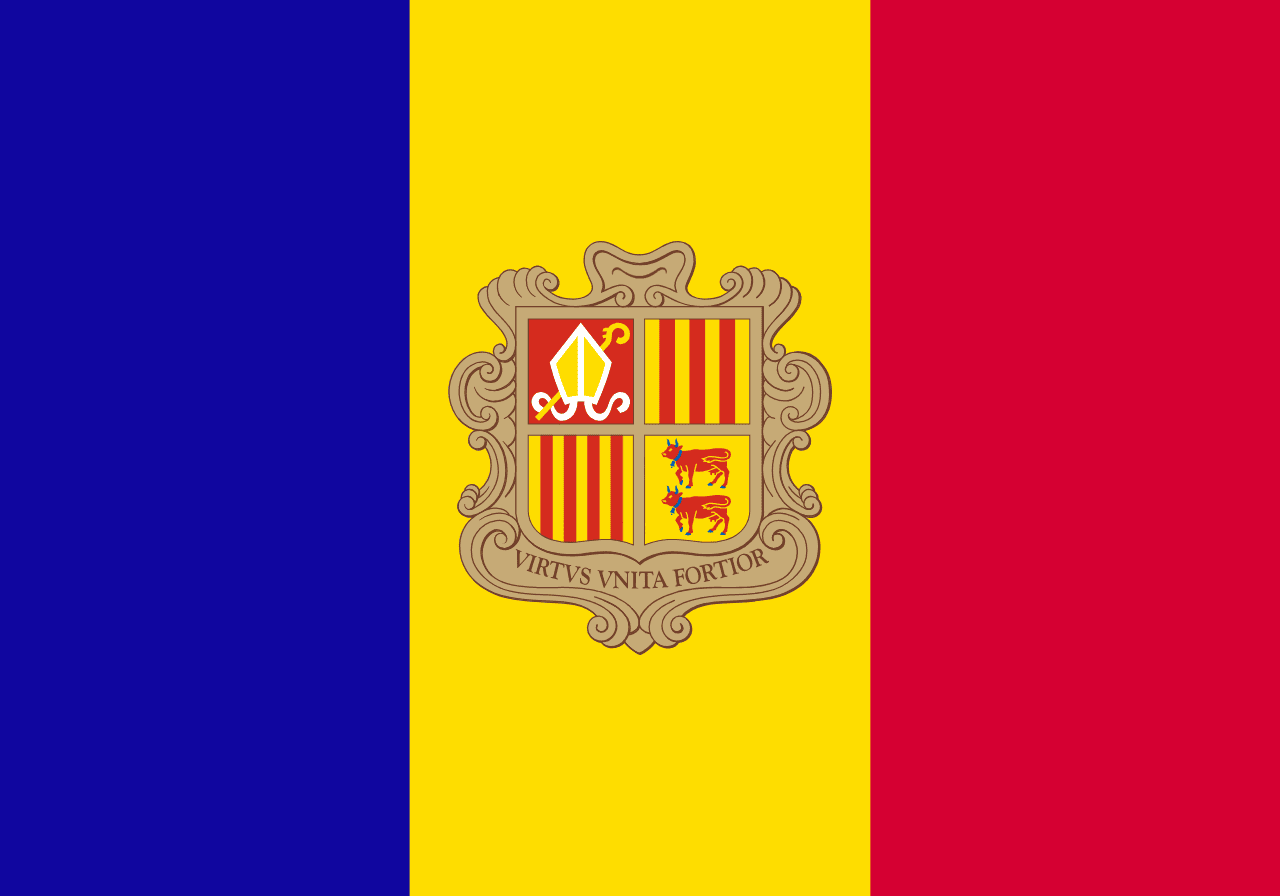
The History of Andorra: From Ancient Times to Today
🌐 Translate:
**The History of Andorra: From Ancient Times to Today**
Nestled high in the eastern Pyrenees mountains, sandwiched between France and Spain, lies the tiny principality of Andorra. With an area of just 468 square kilometers, it may be one of the smallest nations in Europe, but its rich history is anything but insignificant. From the echoes of ancient tribes to the complexities of modern governance, Andorra's story is one of resilience, autonomy, and a unique blend of cultures. Join us as we traverse back through time to explore the fascinating history of this mountainous enclave.
### Ancient and Indigenous History
The history of Andorra begins long before the first written records. Archaeological evidence suggests human habitation in the region dating back to the Neolithic period, around 3000 BCE. These early inhabitants left behind remnants of their existence, including tools and pottery, indicating a lifestyle that revolved around hunting, gathering, and rudimentary agriculture.
The region's isolation and rugged terrain proved advantageous for the preservation of indigenous cultures. By the time the Romans arrived, Andorra was home to the Iberians, a group of tribes known for their agricultural practices and craftsmanship. The Romans, realizing the strategic importance of the Pyrenees as a trade route, incorporated Andorra into their empire around 200 BCE. They established settlements and roads, which would influence the development of the region for centuries to come. The Romans also brought with them the Latin language, laying the foundation for the Andorran language, Catalan.
As the Roman Empire began to crumble in the 5th century, Andorra's fate took another turn. The region became a contested territory among various tribes, including the Visigoths, who ruled parts of the Iberian Peninsula. With the fall of the Roman Empire, local governance shifted, and the Andorran people found themselves under the influence of powerful neighbors.
### The Rise of the Countship
In the 8th century, during the Muslim conquest of the Iberian Peninsula, Andorra became a refuge for Christians fleeing persecution. It was during this tumultuous time that the region solidified its identity as a Christian stronghold. In 805 CE, Charlemagne, the king of the Franks, is said to have granted the Andorrans a charter that recognized their autonomy in exchange for their loyalty. This early form of governance foreshadowed the unique political structure that would define Andorra for centuries.
By the 9th century, Andorra was established as part of the County of Urgell, a Catalan territory. The Count of Urgell granted the Andorrans certain privileges, including the right to self-governance through a council known as the "Consell de la Terra." This council would play a significant role in Andorra's political evolution, giving voice to the local population and allowing them to participate in decision-making processes.
A key turning point in Andorra's history occurred in 1095 when the Count of Urgell granted Andorra a charter known as the "Document of the Privileges." This document enshrined the rights and privileges of the Andorran people and established the framework for their governance. It also marked the beginning of Andorra's unique dual sovereignty, with both the Count of Urgell and the Bishop of Urgell claiming authority over the region.
### The Dual Principality
As the centuries rolled on, Andorra's political structure evolved into what is known today as the "Co-principality." This unique governance model emerged in the 13th century when the Bishop of Urgell and the French king began to share power over Andorra. The first recorded co-prince was the Bishop of Urgell, while the French title was represented by the King of France. This dual system remains in place to this day, making Andorra a rarity in European governance.
During the Middle Ages, Andorra enjoyed relative stability, despite the broader conflicts occurring in Europe, including the Hundred Years' War and the Wars of Religion. The Andorran people continued to govern themselves through their council, maintaining their customs and traditions. The famous Andorran "parlament" developed, where local representatives convened to discuss matters of state, thus laying the groundwork for the modern democratic practices seen today.
The 16th century brought religious tensions to Andorra, as the Protestant Reformation swept across Europe. Andorra, being predominantly Catholic, stood against the tide of Protestantism, reinforcing its traditional values and sense of identity. The nation’s commitment to Catholicism would shape its culture, rituals, and festivals for generations to come.
### The Colonial Period and Modern Formation
As Europe entered the Age of Enlightenment, Andorra began to modernize. The 19th century saw significant changes in the governance and economy of the principality. In 1812, the Andorran parliament passed a series of reforms and established a more structured legal system, which would be a precursor to future reforms.
The 20th century brought further modernization to Andorra, particularly after the Spanish Civil War and World War II. As Europe rebuilt, Andorra transformed from an agrarian society into a tourist destination. The establishment of ski resorts in the 1950s and '60s capitalized on the region’s mountainous terrain, bringing an influx of visitors eager to experience its natural beauty.
Around the same time, the principality began to assert its independence more vigorously, even as it maintained its historical ties with France and Spain. The 1993 Constitution marked a watershed moment in Andorran history, formally establishing itself as a parliamentary democracy and providing a legal framework for the nation’s governance. Andorra embraced principles such as freedom of speech, equality before the law, and human rights, aligning itself with modern democratic ideals.
Key figures during this time included Joan Marti, who played a pivotal role in the drafting of the constitution, and numerous Andorran citizens who contributed to the democratic process. This movement towards modernity was not without challenges; the country faced economic shifts and questions about its place in the global economy.
### Andorra Today
Today, Andorra is a thriving microstate, celebrated for its breathtaking landscapes and status as a tax haven. With a population of around 77,000, it boasts a unique blend of Catalan, French, and Spanish influences, reflected in its culture, architecture, and cuisine. The capital, Andorra la Vella, is a bustling hub of activity, known for its shopping, historical sites, and vibrant nightlife.
One of the lesser-known facts about Andorra is its commitment to sustainability. As the world grapples with climate change, Andorra has positioned itself as a leader in environmental protection. The government promotes eco-tourism, sustainable farming practices, and renewable energy initiatives, ensuring that the beauty of its landscapes is preserved for future generations.
Moreover, Andorra has continued to navigate the complexities of international relations. As a member of the United Nations since 1993, it has worked to bolster its global presence while maintaining its unique governance model. The principality has also engaged in negotiations with the European Union to establish trade agreements, reflecting its desire to remain relevant in a rapidly changing world.
In recent years, Andorra has embraced technological advancements, with efforts to improve its digital infrastructure and attract tech companies to the region. The future looks bright for this small yet significant nation as it balances the preservation of its rich heritage with the demands of modernity.
### Conclusion
The history of Andorra is a testament to the resilience and adaptability of a small nation that has weathered centuries of change. From its ancient roots to its dual principality, the evolution of Andorra is marked by a unique blend of cultural influences and a strong sense of identity. Today, as it stands at the crossroads of tradition and modernity, Andorra continues to inspire curiosity and admiration. Its story reminds us that even the smallest places can hold great significance in the tapestry of history. With its stunning landscapes, rich culture, and vibrant democracy, Andorra is not just a destination; it is a living testament to the enduring spirit of its people.