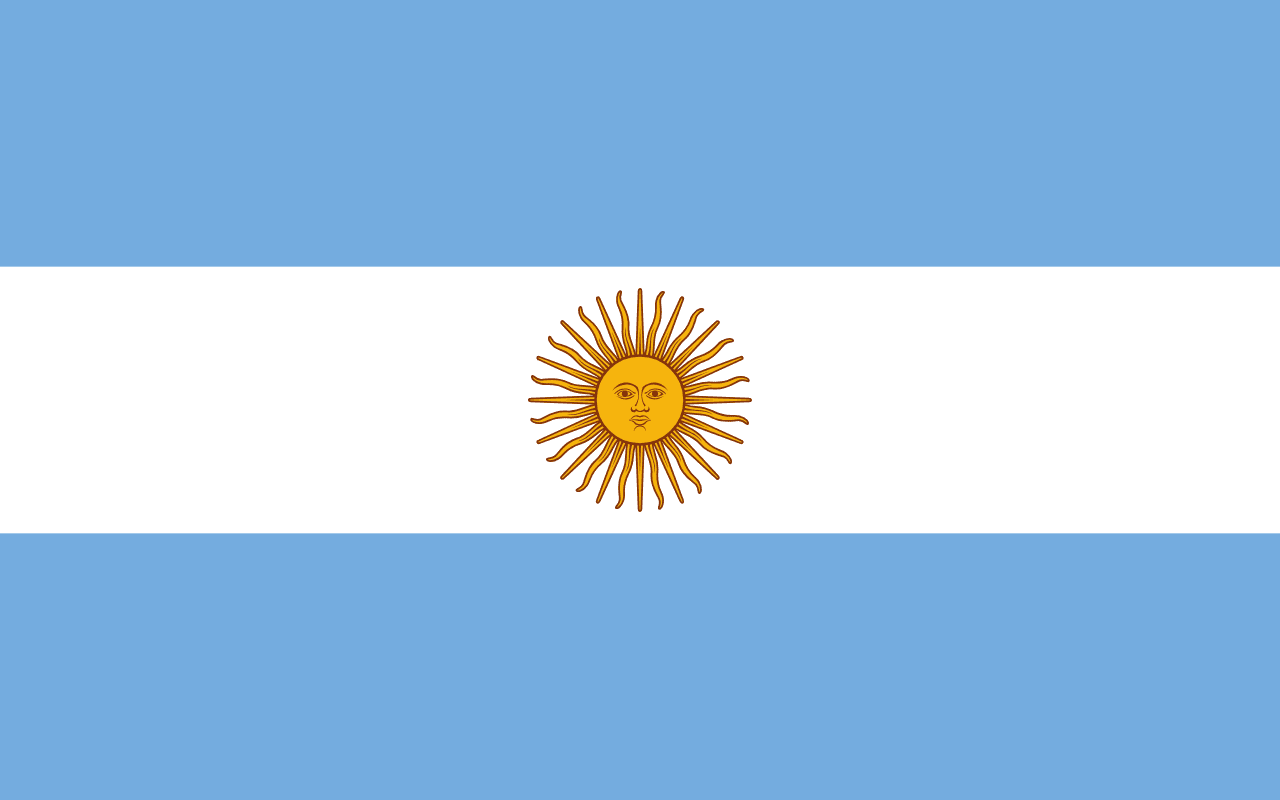
The History of Argentina: From Ancient Times to Today
🌐 Translate:
# The History of Argentina: From Ancient Times to Today
Argentina, a land of vast landscapes and vibrant cultures, has a history as rich and diverse as its geography. From the ancient indigenous peoples to the modern nation-state we recognize today, Argentina's journey through time is marked by resilience, conflict, and transformation. Here, we traverse the captivating timeline of this South American gem, exploring its ancient roots, colonial encounters, the quest for independence, and its evolution into a contemporary powerhouse.
## Ancient and Indigenous History
Long before the arrival of Europeans, Argentina was home to a plethora of indigenous cultures, each contributing to the intricate tapestry of its history. The earliest known inhabitants of the region were hunter-gatherers who roamed the plains and forests, leaving behind evidence of their existence in cave paintings and artifacts.
By around 4000 BCE, the indigenous groups began to form more permanent settlements, notably in the northwest regions. The Diaguita, for example, established sophisticated agricultural practices, cultivating crops like maize, beans, and squash. They were renowned for their intricate ceramics and textiles, showcasing a rich cultural life that thrived long before European contact.
In the central regions, the peoples of the Pampas, such as the Mapuche, lived as nomadic herders, expertly navigating the expansive grasslands with their horses. Their warrior culture and strong sense of community forged identities that would be crucial in the fight against colonial encroachments in later years.
## The Era of Empires
As we move through the centuries, the southern part of South America witnessed the rise and fall of several empires and kingdoms. The Inca Empire, which flourished in the 15th century, extended its influence into northwestern Argentina. The Incas brought with them advanced agricultural techniques and a complex political structure, leaving a lasting impact on the regions they governed.
However, the Inca presence in Argentina was short-lived, as the Spanish conquest began in the early 16th century. The conquest of the Inca Empire by Francisco Pizarro and his compatriots opened the door for further exploration and colonization in South America, including what would become Argentina.
## The Colonial Period
In 1536, Pedro de Mendoza founded the first Spanish settlement in Argentina, named Nuestra Señora Santa María del Buen Aire, in what is now Buenos Aires. Unfortunately, this settlement failed due to attacks from indigenous tribes and the harsh realities of the environment. The Spanish returned in 1580 under Juan de Garay, establishing a more permanent presence that would become the capital of the Viceroyalty of Peru.
During this colonial period, the city of Buenos Aires emerged as a crucial port for trade. The Spanish Crown imposed strict regulations, limiting commerce to designated ports and creating a system that alienated local merchants. This tension simmered under the surface of colonial life, as resentment grew among the Creoles—those of Spanish descent born in the Americas—who began to demand greater autonomy and recognition.
The colonial era also saw the spread of Catholicism through missionary efforts. The Jesuits, in particular, established missions that integrated indigenous peoples into the colonial economy, albeit often through coercive means. These missions, notably in the north, facilitated a cultural exchange but also led to the suppression of indigenous traditions and practices.
## The Road to Independence
The quest for independence from Spanish rule began to take shape in the early 19th century. Inspired by revolutions in North America and France, the desire for self-governance spread among the people of the Viceroyalty of the Río de la Plata. Tensions reached a boiling point in 1810, when the May Revolution in Buenos Aires marked the beginning of the independence movement.
Key figures emerged during this tumultuous period, most notably José de San Martín, a military leader and liberator who played a pivotal role in Argentina's fight for independence. San Martín, alongside Simón Bolívar, would become one of the prominent leaders of the broader South American independence movements. His strategic brilliance culminated in the crossing of the Andes in 1817, a remarkable feat that brought liberation to Chile and eventually led to the consolidation of independence for several South American nations.
By the time the Declaration of Independence was proclaimed on July 9, 1816, the fight was far from over. Argentina's path to becoming a unified nation was riddled with internal strife between federalists and unitarians, creating a landscape of political fragmentation that would last for decades.
## Nation-Building and Civil Strife
The decades following independence were marked by civil wars, political upheaval, and the struggle to define national identity. The 19th century was a period of intense factionalism, primarily between federalists, who favored regional autonomy, and unitarians, who sought a strong central government. This division led to a series of conflicts known as the Argentine Civil Wars, culminating in the Battle of Caseros in 1852, which established the federal system that would characterize Argentina’s governance.
The Constitution of 1853 laid the foundation for modern Argentina, providing a framework for political rights, freedom of expression, and representative governance. However, the struggle for true unification and national identity continued, with provincial leaders often challenging the authority of Buenos Aires.
Amidst this tumult, Argentina experienced significant economic growth in the latter part of the 19th century, largely driven by agricultural exports. The introduction of European immigrants transformed the cultural landscape, resulting in a unique blend of traditions that still shapes Argentine identity today. The influx of Italians and Spaniards, in particular, influenced everything from cuisine to language, creating a vibrant cultural mosaic.
## The Golden Age and Its Aftermath
The early 20th century is often referred to as Argentina's "Golden Age." The nation's economy boomed, propelled by agricultural exports, particularly beef and grain. Buenos Aires transformed into a cosmopolitan city, earning the nickname "Paris of South America" for its European-style architecture and cultural institutions. This era saw the rise of tango, a passionate dance that reflected the struggles and joys of the working class.
However, the prosperity of the Golden Age could not shield Argentina from political instability. The rise of Juan Domingo Perón in the 1940s marked a turning point in the nation’s political landscape. Perón, initially a labor minister, became president and championed the rights of workers, establishing a welfare state that provided health care, education, and workers' rights. His wife, Eva Perón, became an iconic figure, advocating for women's suffrage and social justice.
Despite their popularity, Perón's government faced opposition and was eventually overthrown in a military coup in 1955. This initiated a period of political turmoil, characterized by a seesaw of military and civilian governments, with Perón returning to power in 1973, only to be ousted again shortly thereafter.
## The Dirty War
The most harrowing chapter in Argentina's recent history is the period known as the "Dirty War" (1976-1983), during which a military dictatorship ruled the nation. The government engaged in brutal repression of suspected dissidents, leading to the forced disappearance of thousands of Argentines. Families still seek justice and accountability for the atrocities committed during this dark era, and the legacy of the victims remains a poignant part of Argentina's collective memory.
Throughout this time, the Madres de Plaza de Mayo, a group of mothers whose children were disappeared, emerged as a powerful symbol of resistance. Their relentless pursuit of truth and justice has become an enduring part of Argentina's struggle for human rights.
## Argentina Today
As we journey into the present, Argentina stands at a crossroads, facing both challenges and opportunities. The country has experienced significant economic fluctuations, often marked by inflation, debt crises, and social unrest. Yet, amidst the struggles, Argentina remains a nation replete with cultural richness and diversity.
The 21st century has seen the rise of progressive movements advocating for social change, including the legalization of same-sex marriage in 2010, making Argentina the first country in Latin America to do so. More recently, the fight for reproductive rights has gained momentum, reflecting a society that is increasingly vocal about social justice and equality.
Today, Argentina is a vibrant democracy, with a citizenry eager to engage in shaping their future. While the challenges of the past still echo in the corridors of history, the spirit of resilience and cultural pride that defines Argentina continues to inspire hope and progress.
## Conclusion
The history of Argentina is a testament to the strength of its people, a narrative woven with threads of indigenous heritage, colonial encounters, revolutionary fervor, and modern struggles for identity and justice. As the nation navigates the complexities of the present, it does so with a rich legacy of resilience and a commitment to forging a brighter future. Through the lens of history, Argentina tells a story not just of survival, but of vibrant cultural evolution—a story that continues to unfold with each passing day.