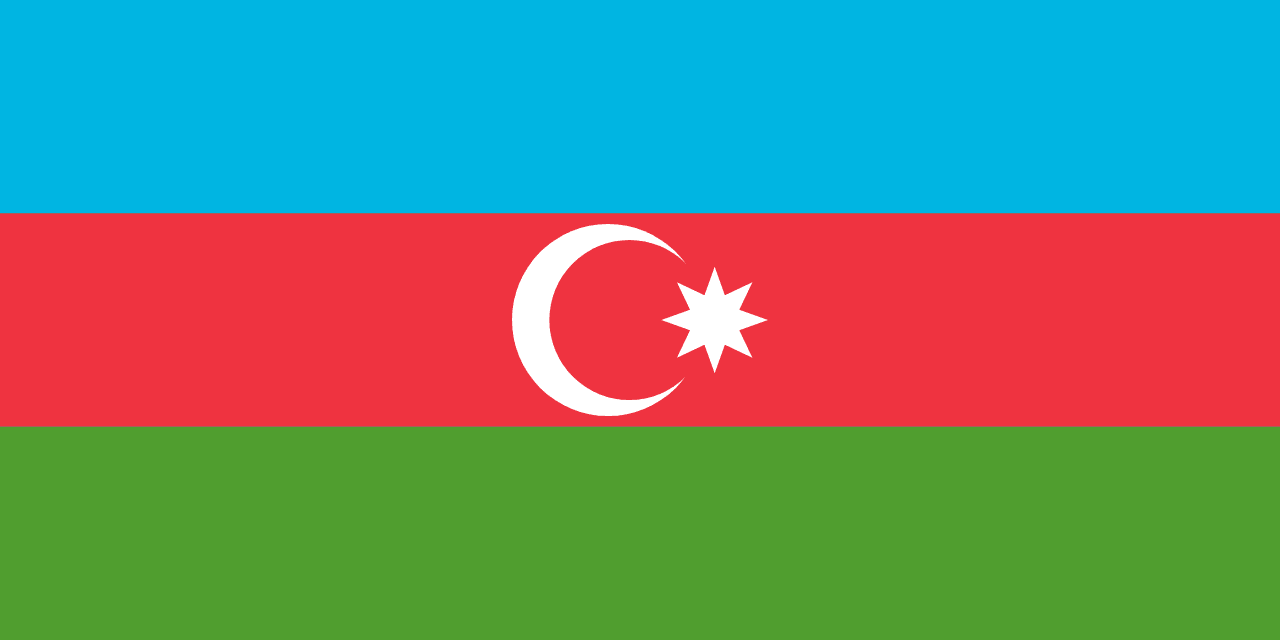
The History of Azerbaijan: From Ancient Times to Today
🌐 Translate:
# The History of Azerbaijan: From Ancient Times to Today
Nestled at the crossroads of Eastern Europe and Western Asia, Azerbaijan is a land rich in history, culture, and diversity. Often referred to as the “Land of Fire” due to its natural gas fires known as “eternal flames,” the country’s past is a tapestry woven with threads of ancient civilizations, empires, and vibrant cultural exchanges. The journey through Azerbaijan’s history is like traversing a grand narrative filled with triumphs and tribulations, marked by the resilience of its people and the beauty of its landscapes.
## Ancient and Indigenous History
Azerbaijan’s roots sink deep into the bedrock of ancient civilizations. Evidence of human presence in the region dates back to the Stone Age, with archaeological finds such as the Gobustan Rock Art Cultural Landscape, a UNESCO World Heritage site. The rock carvings here, showcasing rituals and daily life, reveal that this land was inhabited by early humans who were artists and storytellers long before written history began.
By the first millennium BCE, the region saw the emergence of various tribes and cultures. The Medes, an ancient Iranian people, and later the Persians, had significant influence over the territory. One of the most notable figures of this era is Cyrus the Great, the founder of the Achaemenid Empire, which extended into present-day Azerbaijan, introducing Zoroastrianism as a predominant faith. This monotheistic religion shaped the moral landscape of the region and left a lasting mark on its cultural identity.
The area was also home to Albanians—an ancient people who established the Caucasian Albania kingdom around the 4th century BCE. This early state played a central role in the religious and cultural development of the region, adopting Christianity in the 4th century CE, making it one of the first regions in the world to embrace the faith.
## The Era of Great Empires
As the centuries rolled on, Azerbaijan became a contested ground for empires due to its strategic location along trade routes. The Parthians and later the Sassanids from Persia vied for control, and with every change of power, the culture of Azerbaijan was enriched.
The arrival of Islam in the 7th century marked another significant turning point. The Umayyad and Abbasid caliphates brought new religious and cultural influences. During this time, Azerbaijan became a melting pot where Persian, Arab, and Turkic cultures intertwined. This fusion was evident in the flourishing of literature, philosophy, and science, with scholars like Muhammad al-Khwarizmi, who laid the groundwork for algebra.
In the 11th century, the Seljuks rose to power, further integrating the region into the Islamic world. The establishment of the Shirvanshah dynasty in the 9th century marked a golden age for Azerbaijani culture, where arts, poetry, and architecture flourished. The poet Nizami Ganjavi, whose works are still celebrated today, emerged from this era, providing a literary legacy that resonates through the ages.
The Mongol invasion in the 13th century, led by Genghis Khan, shattered the intricate tapestry of Azerbaijani governance and culture, yet it also introduced new dynamics. The Ilkhanate, a Mongol division, ruled the region in the 13th and 14th centuries, leading to a period where Persian and Turkic influences coalesced, giving rise to a unique Azerbaijani identity.
The Safavid dynasty in the 16th century established Shiite Islam as the state religion, further entrenching its cultural uniqueness. Their reign saw the promotion of arts, architecture, and the establishment of Tabriz as a major cultural hub. The famous blue-domed mosques and palaces built during this era still captivate the imagination of visitors today.
## The Colonial Period and the Russian Empire
As the centuries progressed, the geopolitical landscape shifted dramatically. By the 18th century, Azerbaijan found itself fragmented into various khanates, small semi-independent principalities that were often at odds with each other. This decentralization made the region susceptible to external influence and invasion.
The Russian Empire, expanding southward, coveted Azerbaijani territory for its strategic and commercial value. After a series of wars with Persia, notably the Russo-Persian Wars of the early 19th century, Azerbaijan was officially annexed by Russia in 1828. This period marked a dual-edged sword for Azerbaijan: while it brought about modernization and infrastructural development, it also led to cultural suppression and the erosion of local governance.
Despite the challenges, the 19th century was a time of awakening. The rise of the Azerbaijani intelligentsia, a group of thinkers and reformers, heralded a new era of national consciousness. Figures like Mirza Fatali Akhundov, a playwright and philosopher, began advocating for modernization, education, and national identity. This intellectual movement laid the groundwork for future aspirations of independence.
## The Path to Independence
The collapse of the Russian Empire during World War I opened a door to independence for Azerbaijan. In May 1918, Azerbaijan declared itself a Democratic Republic, becoming the first secular parliamentary republic in the Muslim world. This short-lived independence was a monumental achievement, promoting civil rights and gender equality, including the granting of suffrage to women.
However, the joy of independence was fleeting. In April 1920, the Red Army invaded Azerbaijan, and the country was incorporated into the Soviet Union. The following decades brought significant industrialization and modernization, but at a cost; traditional cultural practices were suppressed, and many were subjected to political repression.
During the Soviet era, Azerbaijan became a significant player in the energy sector, with major oil fields developed in Baku. The city emerged as a crucial industrial center, contributing to the Soviet economy. The legacy of this period had lasting effects, as Azerbaijan became a vital oil supplier, which later played a key role in its post-Soviet independence.
## The Modern Formation of Azerbaijan
The dissolution of the Soviet Union in 1991 heralded a new dawn for Azerbaijan, as it reclaimed its independence after more than seventy years of Soviet rule. The early years of independence were tumultuous, marked by political instability and conflict, particularly the war with Armenia over the disputed Nagorno-Karabakh region. This brutal conflict, which erupted in the late 1980s and continued through the early 1990s, caused widespread suffering and displacement.
Amidst this chaos, Heydar Aliyev emerged as a pivotal figure. A former KGB officer and leader of the Azerbaijani Soviet Socialist Republic, he returned to power in 1993 amidst national turmoil. His leadership marked a turning point for Azerbaijan, as he implemented policies aimed at stabilizing the economy and fostering international relations. The signing of oil contracts in the late 1990s with Western companies, colloquially known as the “Contract of the Century,” transformed Azerbaijan into a vital player in the global energy market.
## Azerbaijan Today
Today, Azerbaijan stands as a nation that bridges East and West, blending rich traditions with modern aspirations. The capital, Baku, is a bustling metropolis with a skyline adorned by futuristic architecture, including the iconic Flame Towers and the Heydar Aliyev Center designed by Zaha Hadid. The city’s blend of ancient and contemporary is a testament to its historical depth and forward-looking vision.
Culturally, Azerbaijan is a vibrant mosaic of ethnicities and traditions. The country hosts international events, such as the Eurovision Song Contest and the Formula 1 Grand Prix, showcasing its hospitality and modernity. Furthermore, the government has invested in the arts, promoting Azerbaijani music, dance, and cuisine, which reflect its diverse heritage.
Despite its recent economic gains, Azerbaijan faces challenges, particularly concerning political freedoms and human rights. The unresolved conflict over Nagorno-Karabakh remains a sensitive issue, echoing the struggles of the past and casting shadows on future relations with neighboring Armenia. However, the spirit of resilience continues to define the Azerbaijani people, who navigate their identity in a rapidly changing world.
## Conclusion
The history of Azerbaijan is a narrative of endurance and transformation, where ancient legacies and modern aspirations coexist. From its early roots as a cradle of civilization to its contemporary role as an emerging energy powerhouse, the story of Azerbaijan is still being written. As the nation looks to the future, it carries with it the complexities of its past—a testament to its rich heritage, diverse culture, and the indomitable spirit of its people. The journey of Azerbaijan is far from over, and its potential for growth and development continues to inspire those who seek to understand this remarkable land.