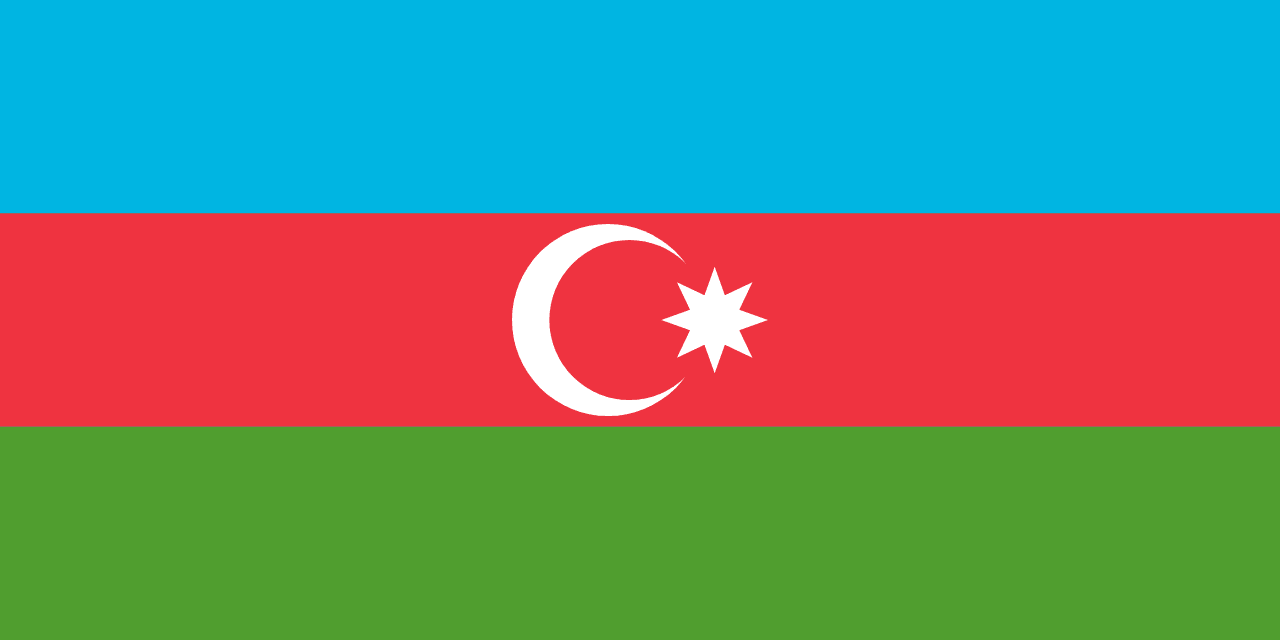
Azerbaijan is a country of remarkable contrasts — a Caspian Sea nation sitting at the junction of Eastern Europe and Western Asia, where glass-and-steel architecture rises beside medieval walls, and where flames have erupted naturally from the earth for thousands of years, earning the land its ancient name: the Land of Fire. Bordered by Russia to the north, Georgia to the northwest, Armenia to the west, and Iran to the south, with a Caspian coastline that defined the ancient trade routes between East and West, Azerbaijan is a country that rewards curious travellers with constant surprise.
Baku, the capital, is a genuinely extraordinary city. The medieval walled Old City — Icheri Sheher — is a UNESCO World Heritage Site of narrow lanes, caravanserais, hammams, and the mysterious Maiden Tower, a circular stone structure whose original purpose remains unknown despite centuries of study. Just outside the old walls, the Flame Towers — three glass skyscrapers shaped like flickering flames that glow and pulse with LED displays at night — represent the modern Baku that oil wealth has built. The contrast between the two cities within a city is part of what makes Baku so arresting.
Beyond Baku, Azerbaijan opens into a landscape of enormous variety. The Caucasus Mountains in the north contain villages where traditional carpet weaving, ancient watchtowers, and hospitality traditions remain largely intact. The highland town of Sheki, reached through forests and past medieval ruins, contains the Khan's Palace — a summer pavilion decorated with intricate stained glass and fresco work that is considered one of the finest examples of traditional Azerbaijani art. The Gobustان National Park south of Baku preserves over six thousand ancient rock carvings alongside the world's highest concentration of mud volcanoes — eerie bubbling landscapes unlike anything in Europe or Central Asia.
The naturally burning hillside of Yanar Dag — the Fire Mountain — near Baku has been burning for centuries from naturally seeping natural gas, and was described by Marco Polo during his Silk Road journeys. The Caspian Sea, the world's largest landlocked body of water, provides beaches, fishing traditions, and fresh sturgeon.
Azerbaijani cuisine is sophisticated and herb-heavy. Plov rice dishes, dolma, dushbara tiny dumplings, and pomegranate-laced stews reflect Persian and Turkic influences. Black tea with jam is the national drink, taken constantly throughout the day.
April through June and September through November offer the most pleasant temperatures. Azerbaijan is one of the Caucasus's most accessible and fascinating destinations.