The History of Bhutan: From Ancient Times to Today
🌐 Translate:
# The History of Bhutan: From Ancient Times to Today
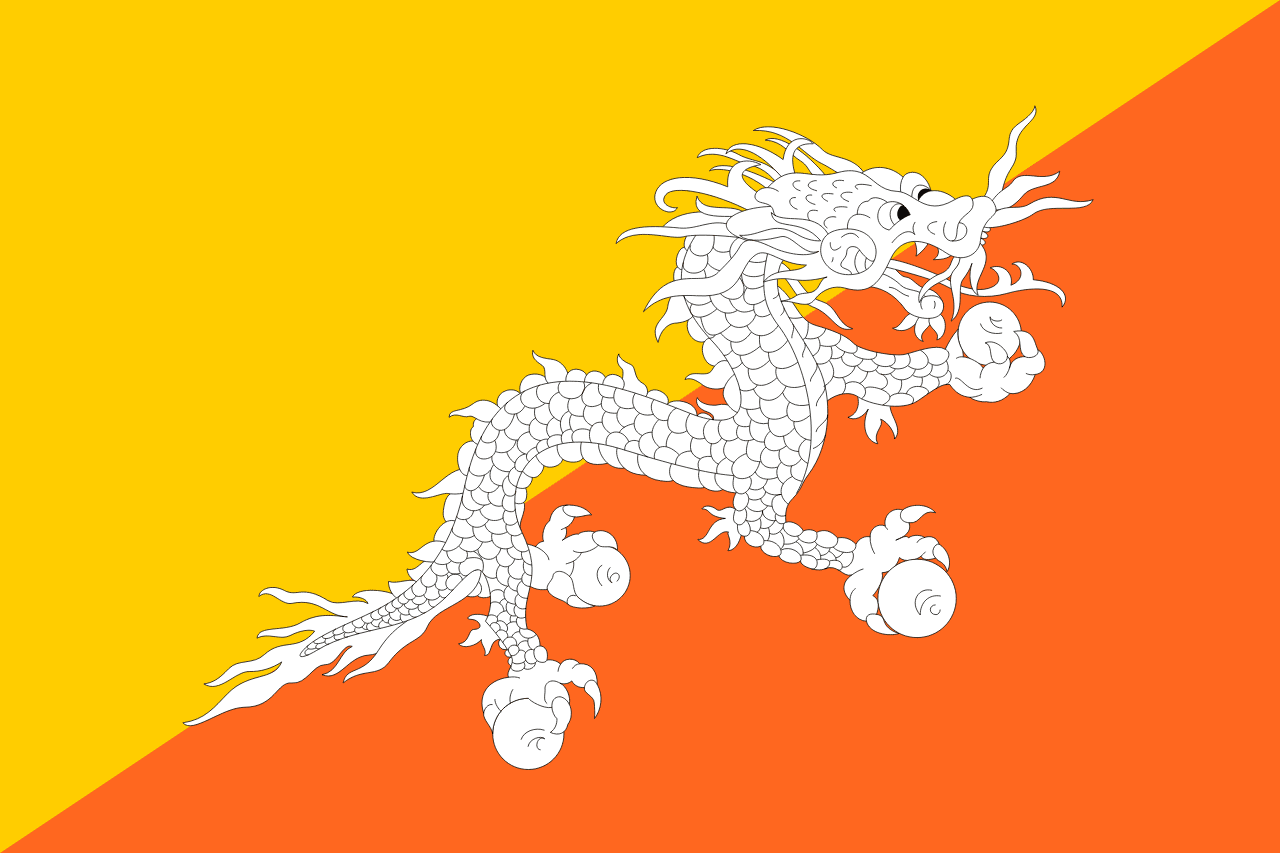
Nestled in the eastern Himalayas, Bhutan is a land of breathtaking landscapes, rich culture, and profound spirituality. Often referred to as “The Land of the Thunder Dragon,” this small kingdom has a history as dramatic as its majestic mountain ranges. From ancient times to the modern era, Bhutan's journey is a tapestry woven from the threads of indigenous traditions, powerful rulers, and the pursuit of happiness.
## Ancient and Indigenous History
The roots of Bhutan's history stretch back into the mists of time, long before the documented eras began. Archaeological evidence suggests that the region has been inhabited since the Neolithic period, with hunter-gatherers roaming the lush valleys and rugged mountains. By around 2000 BCE, the indigenous people, believed to be of Tibetan descent, began forming settled communities. These early inhabitants practiced agriculture, cultivating crops in the fertile river valleys, and developed rich spiritual practices that would shape Bhutan's identity for centuries.
As Buddhism began its spread throughout the Himalayas in the 7th century CE, Bhutan found itself at a crossroads of cultural and spiritual evolution. The arrival of the Indian Emperor Ashoka's missionaries marked the beginning of an enduring relationship between the land and the teachings of the Buddha. Legend speaks of the Buddhist visionary Padmasambhava, or Guru Rinpoche, who is said to have flown into Bhutan on the back of a tigress in the 8th century. He played a pivotal role in establishing Buddhism in Bhutan, laying the foundation for the country’s spiritual landscape.
## The Rise of Kingdoms and Dynasties
As the centuries rolled on, Bhutan transformed into a mosaic of feudal states, each ruled by local chieftains. The political landscape was characterized by constant conflict and shifting alliances. By the 17th century, however, the narrative of Bhutan would take a significant turn with the rise of a unifying figure: Zhabdrung Ngawang Namgyal. A Tibetan lama and a military leader, Zhabdrung fled to Bhutan in 1616 to escape persecution. He established a dual system of government that combined spiritual authority with secular rule.
Zhabdrung's arrival heralded a period of consolidation and development. He fortified the country against external threats, particularly from Tibet and British India, and introduced a unique form of governance called the "Chhoe-de," which divided power between the monarchy and the clergy. Under his leadership, Bhutan witnessed the flourishing of arts and crafts, with the construction of impressive dzongs (fortresses) that still stand as symbols of Bhutan's resilience and architectural prowess.
His death in 1651 marked the beginning of a turbulent period known as the “Zhabdrung's Era,” during which Bhutan was thrown into political disarray. The struggle for power among various rival factions and the absence of a clear succession line led to a century-long power vacuum that would only be resolved in the 19th century.
## The Emergence of Modern Bhutan
The 19th century brought with it a series of changes that would reshape Bhutan once again. A central figure during this time was Ugyen Wangchuck, who emerged as a charismatic leader capable of unifying the fractious political landscape. Recognizing the need for a centralized authority, Ugyen Wangchuck was proclaimed the first King of Bhutan in 1907. This event marked the official establishment of the Wangchuck dynasty and the beginning of a new era in Bhutan's governance.
Ugyen Wangchuck's reign was characterized by efforts to modernize the country while preserving its unique cultural heritage. Recognizing the threats posed by British colonial expansion in India, he skillfully navigated diplomatic relations, resulting in the signing of the Treaty of Punakha in 1910. This agreement allowed Bhutan to retain its autonomy while granting the British control over Bhutan’s foreign affairs. The treaty laid the groundwork for a delicate balancing act between tradition and modernity.
Following Ugyen Wangchuck's death in 1926, his son, King Jigme Wangchuck, ascended to the throne. Under his rule, Bhutan continued its modernization efforts, establishing a formal currency and initiating educational reforms. The king’s reign was significant for its efforts to adapt to the changing times while safeguarding Bhutan’s cultural identity.
## The Colonial Period: The Shadow of British Influence
While Bhutan maintained a degree of independence, the colonial period in South Asia brought with it the looming shadow of British influence. The British sought to create a buffer zone between India and more powerful neighbors, such as Tibet and China, and Bhutan was caught in this geopolitical web. The British established diplomatic relations, which provided Bhutan with protection against external threats but also led to a gradual erosion of its autonomy, as seen in the 1949 Treaty of Punakha.
After World War II, the tides of change began to sweep across Asia, and Bhutan found itself at a crossroads. In the aftermath of the war, rising nationalist movements in neighboring countries prompted a reevaluation of Bhutan's own political structure. Under the leadership of King Jigme Dorji Wangchuck, who ascended to the throne in 1952, Bhutan embarked on a series of ambitious reforms aimed at modernizing the country while preserving its cultural identity.
## Independence and Modern Formation
The 1950s and 1960s were transformative decades for Bhutan. King Jigme Dorji Wangchuck initiated extensive modernization programs, focusing on infrastructure development, education, and health care. His vision was bold and ambitious, as he sought to marry Bhutan's rich cultural heritage with contemporary governance.
In 1961, the king launched the First Five-Year Plan, a significant step towards economic development. This plan aimed at reducing Bhutan’s dependency on agriculture while fostering industrial and infrastructural growth. Meanwhile, he also embraced the idea of “Gross National Happiness,” a concept that would later become synonymous with Bhutan's identity. It emphasized the importance of spiritual well-being and community harmony over mere economic growth.
Sadly, King Jigme Dorji Wangchuck’s life was cut short in 1972 when he was assassinated. His son, Jigme Singye Wangchuck, took the throne and continued his father's legacy of modernization. Under his reign, Bhutan became a constitutional monarchy. In 2008, the country held its first democratic elections, marking a significant departure from its traditional governance. This transition was marked by the adoption of the Constitution of Bhutan, which enshrined the principles of democracy, human rights, and environmental conservation.
## Bhutan Today: A Unique Blend of Tradition and Modernity
Today, Bhutan stands at a unique crossroads, successfully integrating modernity and tradition. With its stunning landscapes, vibrant culture, and spiritual essence, the country has become a beacon of sustainable tourism. Bhutan's commitment to preserving its environment is reflected in its pledge to remain carbon negative, a testament to its dedication to ecological sustainability.
Education and health care have improved dramatically, and the introduction of technology has begun to change the landscape of daily life in Bhutan. Yet, despite these advancements, Bhutan remains deeply connected to its cultural roots. Festivals celebrating age-old traditions, colorful dances, and the vibrant fabric of Buddhist life continue to be a hallmark of this unique kingdom.
At the heart of Bhutan's identity remains the philosophy of Gross National Happiness, which prioritizes the well-being of its citizens over mere economic indicators. This approach has garnered interest from around the world, as policymakers and scholars seek to understand how happiness can be measured and promoted.
## Conclusion
The history of Bhutan is a story of resilience, adaptability, and a profound commitment to preserving its unique cultural identity. From the ancient spiritual practices of its indigenous people to the modern democratic nation it has become, Bhutan’s journey is a testament to the power of harmony between tradition and progress. As the country continues to navigate the complexities of the modern world while staying true to its roots, Bhutan remains a shining example of how a nation can forge its path while cherishing its past. In a world often focused on material wealth and rapid change, Bhutan’s serene landscapes and profound philosophies remind us of the importance of balance, happiness, and the enduring spirit of its people.