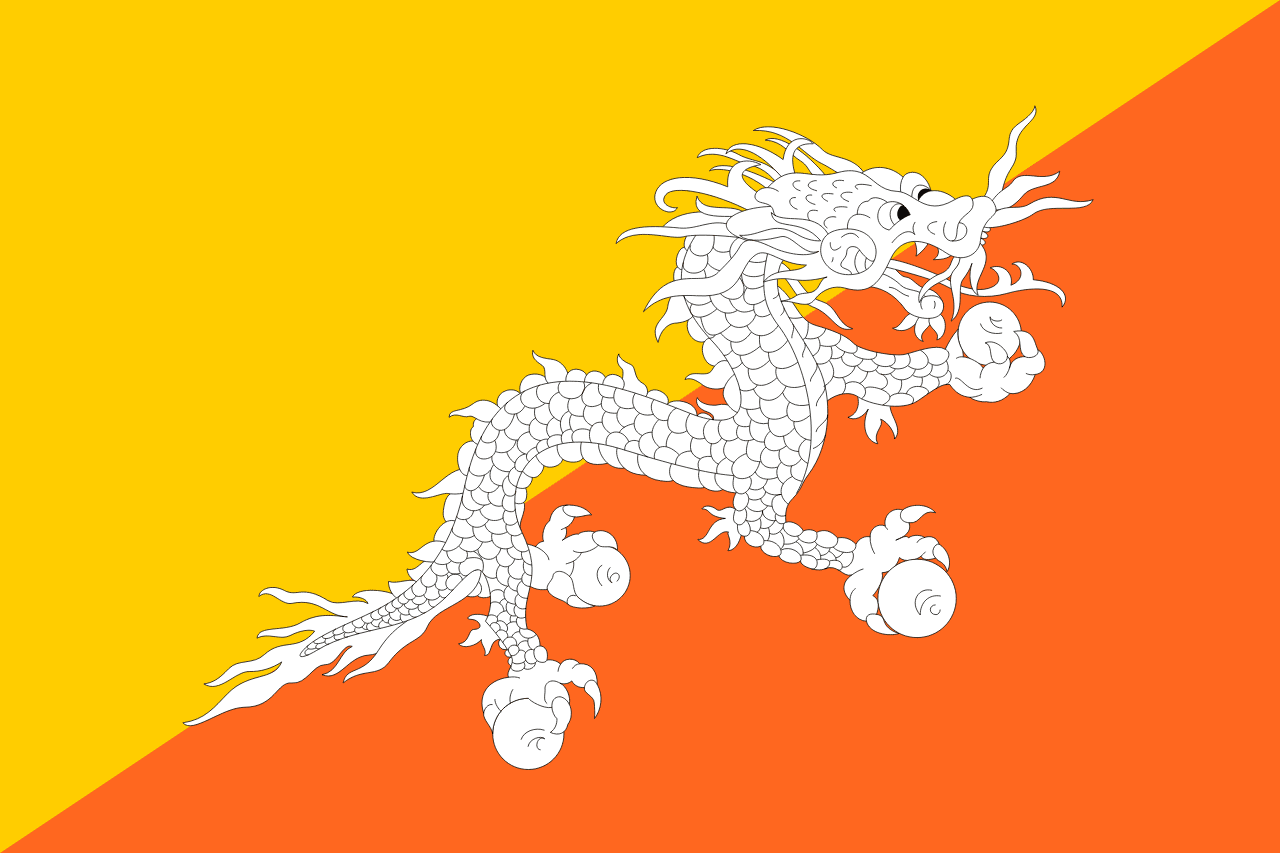
Bhutan is a tiny Himalayan kingdom — bordered by China to the north and India to the south, east, and west — that has made the deliberate and radical choice to measure national progress not by GDP but by Gross National Happiness. The result is a country that feels unlike anywhere else on earth: its forests are constitutionally protected (covering over seventy percent of the land), its culture is actively preserved, its development is tightly managed, and its landscapes remain among the most pristine in Asia.
The Tiger's Nest Monastery — Paro Taktsang — is one of the most dramatic sacred sites in the world. Built into a sheer cliff face at 3,120 metres above the Paro Valley, accessible only by a steep two-to-three-hour hike, the monastery clings to the rock as though defying gravity. According to tradition, Guru Rinpoche flew here on the back of a tigress to meditate and consecrate the valley in the eighth century. The hike through blue pine and rhododendron forests to reach it, with the monastery appearing and disappearing behind ridges, is an experience of sustained beauty and spiritual intensity.
Bhutanese landscape is defined by the eastern Himalayas — a series of steep river valleys running north to south, each with its own distinct microclimate, culture, and dialect. The Punakha Valley, warmer and more fertile than Paro and Thimphu, contains the magnificent Punakha Dzong at the confluence of two rivers — a seventeenth-century fortress-monastery considered the most beautiful building in Bhutan. The Haa Valley in the west and the Bumthang valleys in the centre remain among the country's most spiritually significant and least visited regions.
Thimphu, the capital, is the only capital city in the world without traffic lights. Its intersections are directed by white-gloved traffic police in ornate booths, a detail that captures Bhutan's priorities precisely. The dzong architecture — massive whitewashed fortress-monasteries that serve as administrative and religious centres — dominates every valley.
Bhutanese cuisine is dominated by chilli. Ema datshi — a stew of fresh chillies and yak cheese — is the national dish and is eaten at nearly every meal. Red rice, yak butter tea, and suja butter tea are cultural staples.
October through December and March through May offer the clearest trekking weather. Bhutan's high daily visitor fee funds conservation directly. It is a destination unlike any other — a place where altitude, culture, and conviction converge.