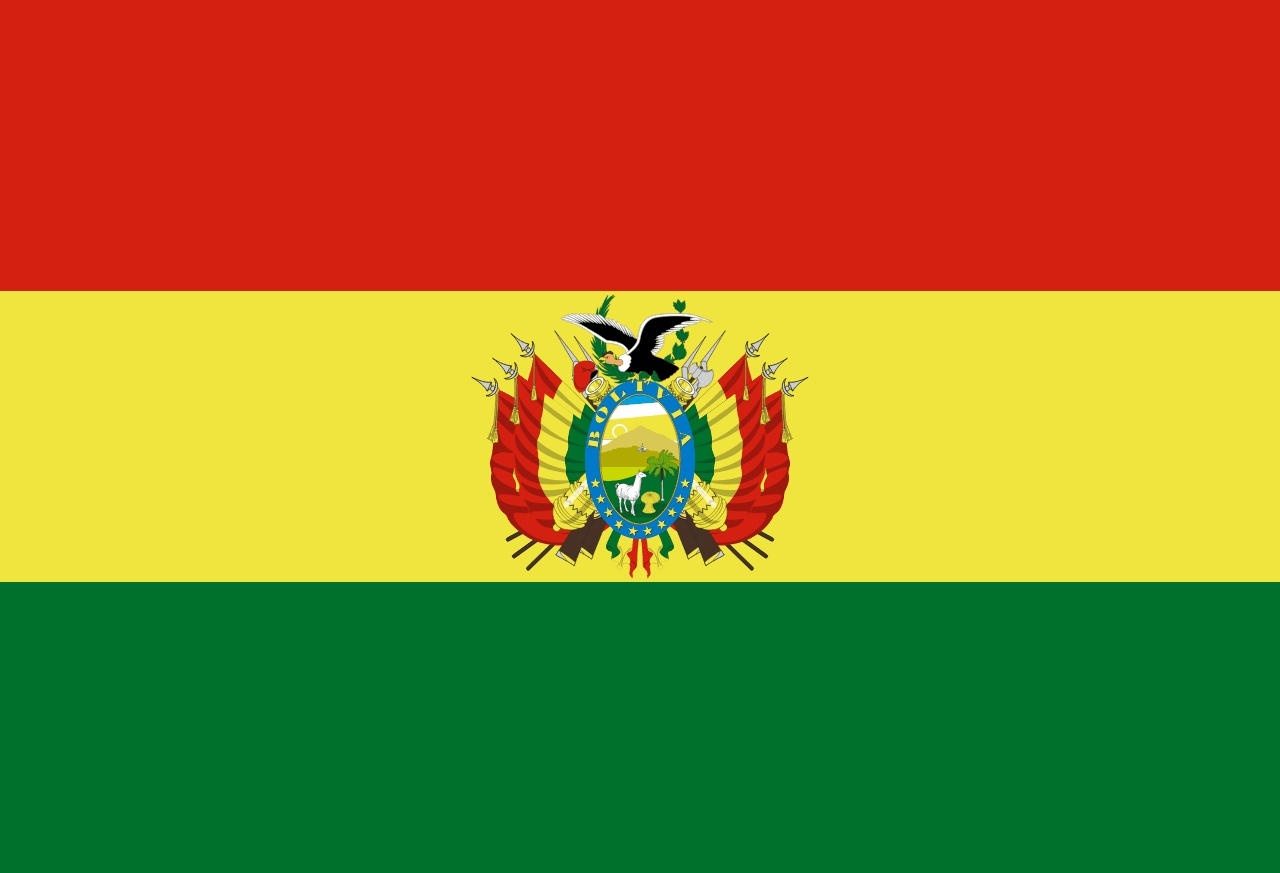
The History of Bolivia: From Ancient Times to Today
🌐 Translate:
# The History of Bolivia: From Ancient Times to Today
Nestled in the heart of South America, Bolivia is a land of breathtaking landscapes and rich cultural heritage. From the high peaks of the Andes to the lush expanses of the Amazon rainforest, the country's diverse geography has shaped its history and the lives of its people. The story of Bolivia is one of resilience, transformation, and the enduring spirit of its indigenous populations. This voyage through time will explore the ancient civilizations that laid the foundations of Bolivian society, traverse the colonial era, and culminate in the nation's modern identity.
## A Tapestry of Ancient Civilizations
Long before the Spanish arrived, the region that is now Bolivia was home to a myriad of indigenous cultures. The earliest known inhabitants of the area date back over 10,000 years, with archaeological findings suggesting that early hunter-gatherer societies thrived in the region. However, it was the emergence of complex societies that truly marked the dawn of Bolivian history.
One of the most notable ancient civilizations was the Tiwanaku culture, which flourished between 300 and 1000 CE near Lake Titicaca. Renowned for its advanced agricultural techniques and impressive architectural achievements, the Tiwanaku society built monumental structures such as the Akapana pyramid and the Gateway of the Sun. These marvels still stand today, testaments to the ingenuity of the Tiwanaku people. They developed a sophisticated understanding of astronomy, which played a crucial role in their agricultural practices, as they aligned their farming cycles with celestial events.
The Tiwanaku civilization eventually declined, paving the way for the rise of the Aymara and Quechua cultures. The latter gave birth to the Inca Empire, which emerged in the early 15th century and rapidly expanded into a vast realm that included modern-day Bolivia. The Incas, known for their administrative prowess and military might, integrated the region into their empire, establishing the city of Cusco as their capital. The Incan influence in Bolivia is still palpable today, as many customs, traditions, and languages, such as Quechua and Aymara, continue to thrive.
## The Colonial Era: Conquest and Resistance
The arrival of Spanish conquistadors in the 16th century marked a dramatic turning point in Bolivian history. In 1538, the ambitious explorer Francisco Pizarro dispatched his lieutenant, Gonzalo Pizarro, to explore the region. Gonzalo soon encountered the formidable Inca Empire, and after a series of skirmishes, the Spanish managed to claim dominion over the territory by exploiting internal divisions among the indigenous populations.
In 1545, the discovery of silver at Potosí initiated a frenzy that would define the colonial economy. Potosí became one of the richest cities in the world, attracting fortune-seekers from across Europe. The Spanish established a brutal system of forced labor known as the mita, exploiting indigenous peoples and African slaves to extract vast quantities of silver. The wealth generated from Potosí fueled the Spanish crown, while the indigenous population suffered significant decline due to overwork, disease, and social upheaval.
Despite the oppression, resistance simmered beneath the surface. Indigenous leaders such as Túpac Katari and Bartolina Sisa emerged as symbols of defiance, rallying the oppressed against colonial rule. Túpac Katari’s uprising in 1781, which sought to liberate the indigenous population from Spanish control, was one of the largest revolts in colonial history. Though ultimately crushed, it ignited a sense of identity and unity among the diverse groups in Bolivia.
## The Road to Independence
The winds of change began to blow across the continent in the early 19th century as revolutionary ideas of liberty and equality spread. The Napoleonic Wars in Europe weakened Spanish authority, providing a ripe opportunity for Bolivians to pursue independence. The struggle for freedom was marked by several uprisings, with prominent figures like Simón Bolívar and Antonio José de Sucre emerging as key leaders in the quest for liberation.
On August 6, 1825, after years of conflict, Bolivia finally declared its independence from Spanish rule, marking the birth of a new nation. The country was named after Simón Bolívar, who dreamed of a united Latin America free from colonial shackles. Sucre, a close ally of Bolívar, became the first president of the newly formed republic. However, the young nation faced immediate challenges, including social inequality, regional divisions, and a struggle to define its identity in a post-colonial world.
The 19th century was characterized by political instability and a series of revolutions, reflecting the growing pains of a nation still grappling with the legacy of colonialism. Power shifted from one military leader to another, often leading to civil wars. The Battle of La Paz in 1898, for instance, was a significant turning point in Bolivian history, as it marked an intense moment of conflict between rival factions vying for control.
## The Modern Era: Struggles and Progress
The early 20th century ushered in a series of social, economic, and political transformations. The 1952 Bolivian National Revolution was a watershed moment that aimed to address the deep-rooted inequalities entrenched in society. Led by the Revolutionary Nationalist Movement (MNR), the revolution brought sweeping reforms, including land redistribution, nationalization of key industries, and the extension of voting rights to indigenous peoples.
Despite these advancements, Bolivia’s path was not without obstacles. The country faced significant challenges throughout the latter half of the 20th century, including economic instability, military coups, and social unrest. The “Cochabamba Water War” of 2000 was a pivotal moment in Bolivian history, as citizens protested against the privatization of water resources, leading to significant political and social ramifications.
The election of Evo Morales in 2005 marked a new chapter in Bolivia's history, as he became the first indigenous president in Latin America. Morales's presidency was characterized by a focus on social justice, economic nationalization, and the empowerment of indigenous communities. He sought to redress historical grievances and promote a sense of national identity that embraced Bolivia's rich indigenous heritage.
However, Morales's tenure was also marked by controversy, particularly regarding his attempts to extend presidential term limits. This led to widespread protests and political fragmentation. In 2019, amid allegations of electoral fraud, Morales fled the country, setting off a wave of political turmoil that resulted in a transitional government.
## Bolivia Today: A Nation in Transition
As of 2023, Bolivia stands at a crossroads, grappling with the complexities of its past while navigating the challenges of contemporary governance. The Bolivian society is a tapestry woven with diverse threads of indigenous heritage, colonial history, and modern aspirations. The struggle for social justice continues, as various indigenous groups seek representation and rights within a system that has often marginalized them.
Bolivia's economy, heavily reliant on natural gas and mineral exports, faces pressures from global markets and the need for sustainable development. The country is rich in biodiversity, and with the ongoing threat of climate change, there is a growing movement towards environmental stewardship and the preservation of indigenous territories.
Culturally, Bolivia has seen a resurgence in the celebration of its indigenous roots, with festivals, traditional music, and art reclaiming spaces in the national narrative. The annual Carnaval de Oruro, recognized by UNESCO as a Masterpiece of the Oral and Intangible Heritage of Humanity, showcases the vibrant blend of indigenous and Spanish influences that define Bolivian culture today.
In recent years, Bolivia has also made strides in education and healthcare, with efforts to improve access to services for its rural and marginalized populations. The country’s youth are increasingly engaged in social and political movements, advocating for a more equitable and inclusive future.
## Conclusion: A Legacy of Resilience
The history of Bolivia is a testament to the resilience of its people. From ancient civilizations to the struggles against colonial oppression, and through the trials of modernity, Bolivians have continually sought to assert their identity and rights. Today, the nation stands as a vibrant mosaic, a testament to its past and a beacon of hope for the future.
As Bolivia navigates the complexities of its modern identity, the spirit of its ancestors continues to inspire. The legacy of the Tiwanaku, the resistance of Túpac Katari, and the dreams of Simón Bolívar remind us that the journey toward justice and equality is one that requires perseverance, unity, and a deep respect for the diverse cultures that make Bolivia a unique and extraordinary nation. As it moves forward, Bolivia remains a living testament to the enduring power of history and the strength of its people.