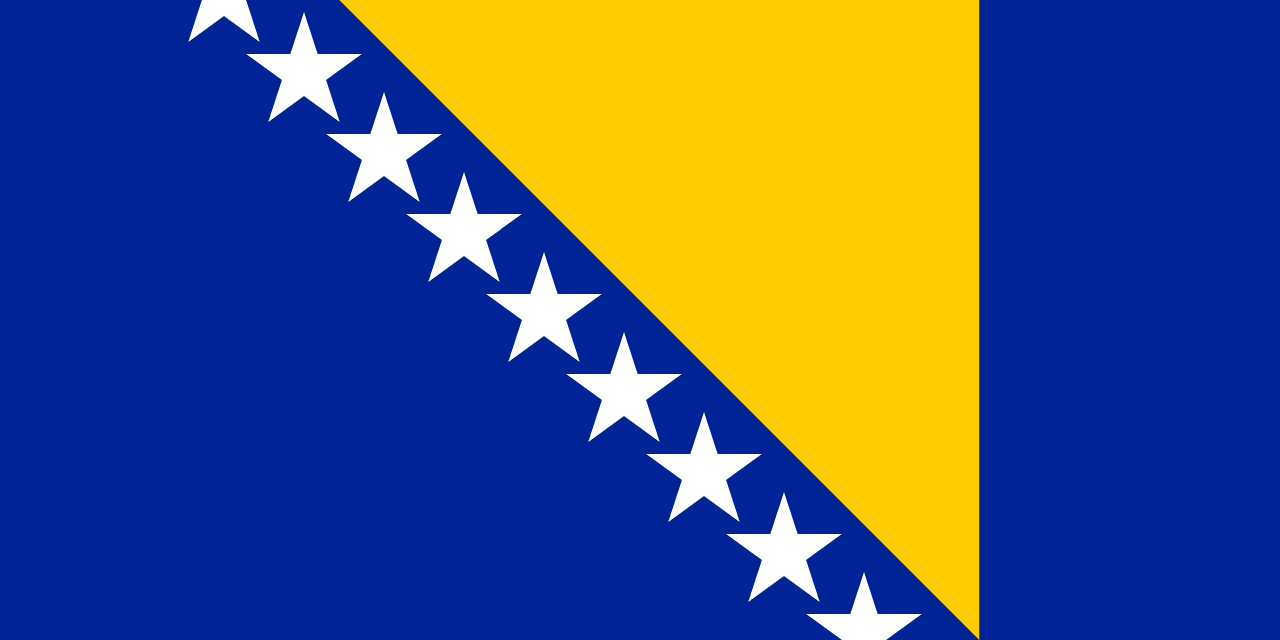
Bosnia and Herzegovina is a Balkan country of exceptional beauty and complex history — a nation where Ottoman mosques, Catholic churches, Orthodox cathedrals, and Sephardic synagogues stand within a few streets of each other in cities that have spent centuries as meeting points of empires. Bordered by Croatia, Serbia, and Montenegro, with a sliver of Adriatic coastline at Neum, Bosnia and Herzegovina is one of Europe's most rewarding and undervisited destinations.
Sarajevo, the capital, is a city that has survived extraordinary hardship. It hosted the Winter Olympics in 1984, endured the longest siege of a capital city in modern warfare from 1992 to 1996, and has rebuilt itself into a genuinely vibrant and welcoming city while preserving the physical scars and living memory of that experience. The Old Town — Baščaršija — is an Ottoman bazaar of coppersmith workshops, coffee houses, mosques, and caravanserais that recalls Sarajevo's role as a major city of the Ottoman Empire. The Latin Bridge, where Archduke Franz Ferdinand was assassinated in 1914 triggering the First World War, is a short walk away.
Mostar, two hours south, has one of the most photographed sights in the Balkans: the Stari Most — the Old Bridge — a sixteenth-century Ottoman arch of white limestone spanning the emerald-green Neretva River. Rebuilt after its deliberate destruction in 1993, it stands again as a symbol of cultural heritage and reconstruction. The old town around it, full of craft workshops, mosques, and Ottoman-era houses, is an exceptionally atmospheric place. Local divers still leap from the bridge into the cold river below as they have for centuries.
The landscapes of Bosnia and Herzegovina are spectacular. The Sutjeska National Park in the southeast contains the Perućica primeval forest, one of the last old-growth forests in Europe, where beech trees hundreds of years old stand in deep shadow over a gorge that drops to the rushing Sutjeska River. Rafting the Tara and Una rivers, the waterfalls of Kravice, and the medieval fortress-lined Neretva Valley are all major natural attractions.
Bosnian cuisine is deeply satisfying: ćevapi (grilled minced meat served with flatbread and raw onion), burek pastry, and the slow-cooked lamb dish sač, cooked under an iron bell buried in coals, are central to the food culture.
April through October is ideal for visiting. Bosnia and Herzegovina is a country where beauty, history, and resilience coexist in ways that leave a lasting impression.