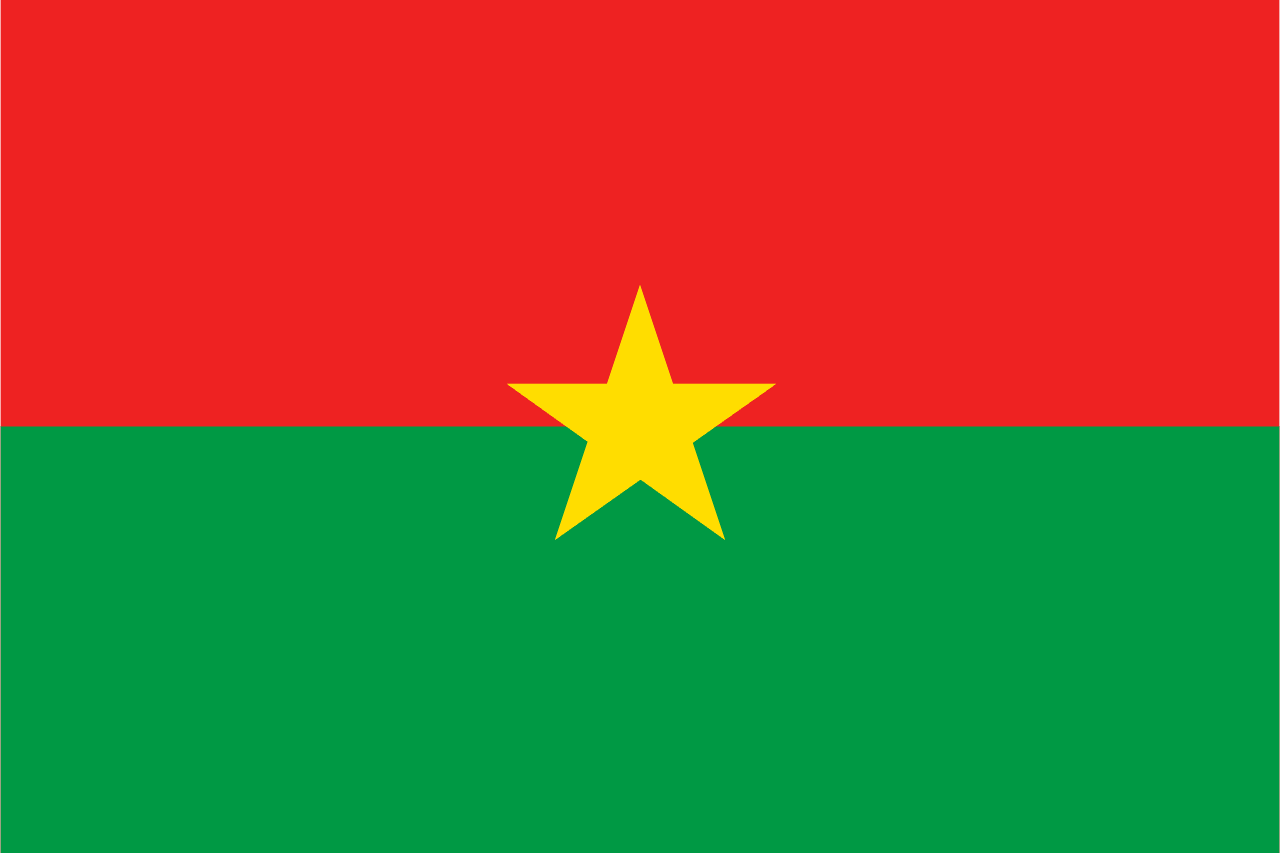
Burkina Faso is a landlocked West African nation that sits at the southern edge of the Sahara — a country of savanna, laterite plains, baobab trees, and a cultural vitality that has made it one of the continent's most significant centres of contemporary art, film, and traditional craft. Bordered by Mali and Niger to the north and east, Benin and Togo to the southeast, Ghana to the south, and Côte d'Ivoire to the southwest, Burkina Faso has forged a distinct national identity since its independence in 1960 — the name itself, chosen in 1984, means Land of Incorruptible People in the Mossi and Dioula languages.
Ouagadougou, the capital — universally known as Ouaga — is the cultural heart of French-speaking West Africa. The city hosts FESPACO, the Pan-African Film and Television Festival, held every two years and considered the most important film festival on the continent. The craft market of Ouaga, particularly the artisan village near the city centre, is one of the best places in West Africa to find bronze castings, leather goods, woven blankets, and carved wooden masks. The Grand Marché is a sensory experience of colour, sound, and commerce with few equals.
The Mossi people, who make up nearly half the population, have preserved elaborate mask ceremonies and animist traditions that coexist with Islam in a syncretic religious landscape of considerable complexity and depth. The village of Tiébélé near the southern border with Ghana is home to the Kassena people, whose compound houses are painted with extraordinary geometric murals in white, red, and black — an artistic tradition maintained by women that transforms entire village walls into monumental canvases. It is one of the most visually striking indigenous artistic traditions in Africa.
The W National Park, shared with Benin and Niger as a UNESCO Biosphere Reserve, protects one of the largest contiguous areas of West African savanna, with elephants, hippopotamuses, lions, cheetahs, and over 350 bird species. Banfora, in the southwest, offers the Cascades de Karfiguéla waterfall, the Tengrela Lake with its seasonal hippopotamus population, and the extraordinary rock formations of the Sindou Peaks — dramatic eroded sandstone pillars rising from the forest floor.
Burkinabè cuisine features tô (a millet or sorghum porridge eaten with sauces), riz gras rice cooked with vegetables, and grilled brochettes.
November through February is the most comfortable season. Despite its challenges, Burkina Faso offers cultural encounters of rare authenticity.