Cambodia is a Southeast Asian nation of extraordinary archaeological heritage, traumatic twentieth-century history, and a people of resilience and grace that has impressed every visitor who has passed through in the decades since the Khmer Rouge period ended. Bordered by Thailand to the northwest, Laos to the north, Vietnam to the east, and the Gulf of Thailand to the southwest, Cambodia occupies the lower Mekong River basin, a landscape of flat rice paddies, forests, and the great inland sea of the Tonle Sap.
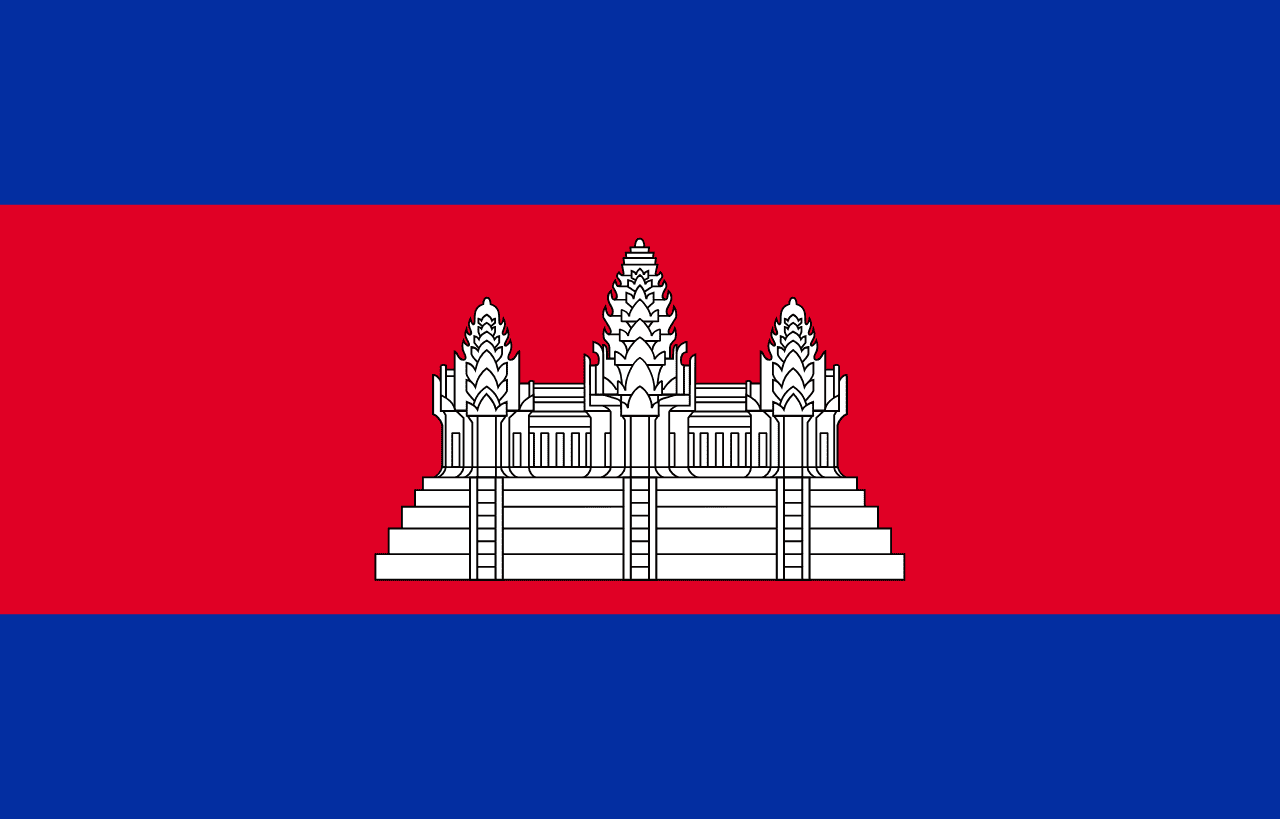
Angkor, the medieval capital of the Khmer Empire, is one of the greatest archaeological sites in the world. The Angkor Archaeological Park covers 400 square kilometres of temples, reservoirs, and causeways built between the ninth and fifteenth centuries. Angkor Wat — the largest religious monument ever constructed — is the centrepiece: a temple-mountain of five towers surrounded by a wide moat, its sandstone galleries carved with miles of bas-relief depicting Hindu epics, celestial beings, and the military campaigns of Khmer kings. Watching dawn break over Angkor Wat's reflection in the western pond, as orange light spreads across the towers, is one of the great travel experiences on earth.
Beyond Angkor Wat, the park contains Ta Prohm — the jungle temple where silk-cotton and strangler fig trees have wrapped their roots around the stone in a dramatic demonstration of nature reclaiming human creation. Bayon, the face temple of Jayavarman VII, has over two hundred serene stone faces gazing outward from its towers in every direction. Banteay Srei, a tenth-century temple carved from pink sandstone in such intricate detail that it is sometimes called the jewel of Khmer art, stands in the forest north of the main complex.
Phnom Penh, the capital, carries the weight of recent history with honesty. The Tuol Sleng Genocide Museum — the former Khmer Rouge prison known as S-21 — and the Choeung Ek Killing Fields outside the city are essential, devastating encounters with the near-destruction of a society in the 1970s. The Royal Palace and Silver Pagoda, the Mekong riverside at dusk, and the city's rapidly growing café and restaurant scene represent the country's determined forward movement.
The Cambodian coast at Kep, Kampot, and the islands of Koh Rong offer beautiful beaches in a still-unhurried setting.
Cambodian cuisine features amok (fish steamed in coconut milk and kroeung paste in banana leaf), beef loc lac, and the herb-heavy fresh rolls called spring rolls.
November through April is the dry season. Cambodia is profound, beautiful, and deeply worth knowing.