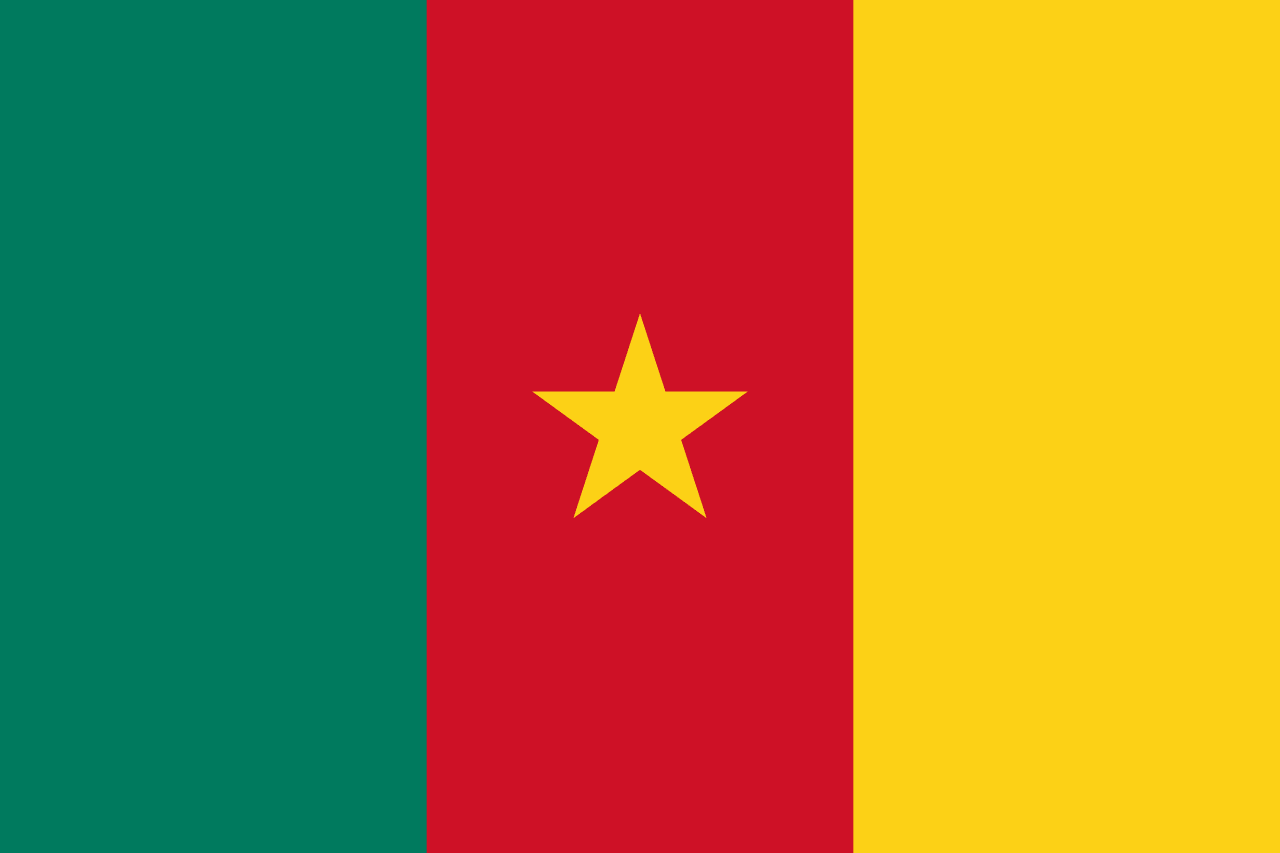
Cameroon is called Africa in miniature — and the description is apt. This central-west African nation bordered by Nigeria, Chad, the Central African Republic, the Republic of Congo, Gabon, and Equatorial Guinea, and opening onto the Gulf of Guinea in the west, compresses within its borders a diversity of landscape, climate, culture, and wildlife that in most continents would span an entire subcontinent. From the Sahel in the north to the Atlantic coast in the west, from the Adamawa plateau in the centre to the Congo Basin rainforest in the south, Cameroon encompasses virtually every African ecosystem.
The northwest of the country is dominated by Mount Cameroon — at 4,095 metres the highest peak in sub-Saharan West Africa, an active volcano that rises directly from the coast near Buea. The annual mountain race, held in February, draws competitors who climb and descend 4,000 metres in under five hours. The volcano's last major eruption was in 1999, and the lava fields on its lower slopes are a raw geological landscape of striking power. The coast here, where the rainforest runs to black volcanic sand beaches, is unlike anything else in Africa.
The Baka forest people of the southern Congo Basin rainforest maintain a hunter-gatherer tradition of deep ecological knowledge, with communities that have lived in the forest for thousands of years. The Campo Ma'an National Park in the south protects forest elephants, western lowland gorillas, chimpanzees, and forest buffalo in primary rainforest of genuine density and wildness. The Dja Faunal Reserve, a UNESCO World Heritage Site in the southeast, contains a vast protected area where the Dja River loops around a still almost entirely intact rainforest.
In the north, the Waza National Park on the edge of the Sahel savanna offers dry-season wildlife viewing — elephant herds, giraffe, lion, and the extraordinary congregation of waterbirds that gathers at Waza's seasonal floodplains. The ancient walled city of Ngaoundéré on the Adamawa plateau, reachable by the overnight train from Yaoundé, is a centre of Islamic Fulani culture with a traditional lamido palace and a Friday mosque of genuine antiquity.
Yaoundé, the capital, and Douala, the commercial port city, both have their own energies. Cameroon's street food features ndolé (a bitter leaf stew with peanuts and fish or meat), plantain, and puff-puff fried dough.
November through February is the best season in the north; the south is accessible year-round. Cameroon is the full breadth of Africa in a single country.