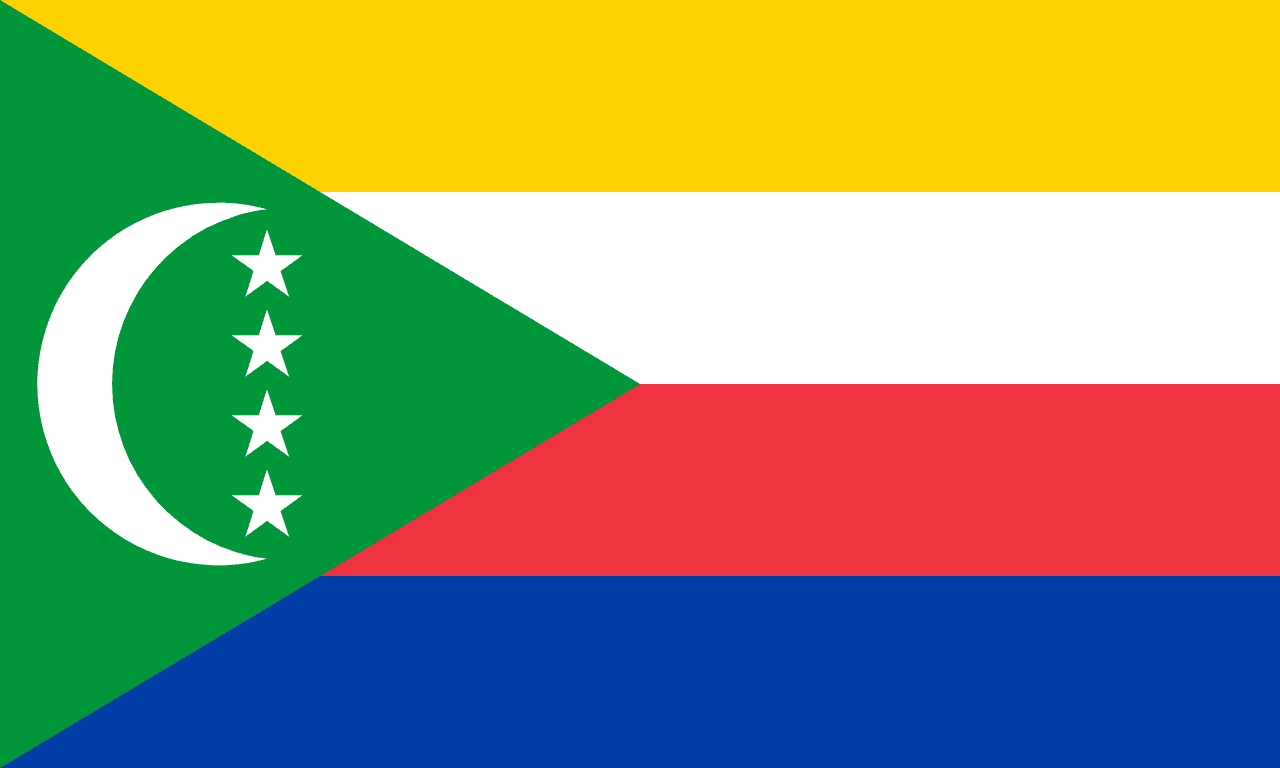
The History of Comoros: From Ancient Times to Today
🌐 Translate:
# The History of Comoros: From Ancient Times to Today
Nestled in the azure waters of the Indian Ocean, between the eastern coast of Africa and Madagascar, lies the archipelago of Comoros. Comprising three main islands—Ngazidja (Grande Comore), Ndzuwani (Anjouan), and Mwali (Mohéli)—alongside several smaller islets, Comoros is a land rich in culture, history, and a tapestry of influences woven from centuries of interaction with traders, conquerors, and colonizers. Its history is a captivating narrative that tells of ancient societies, foreign empires, colonial struggles, and a quest for independence.
## Ancient and Indigenous History
The story of Comoros begins long before written records, in a time when the islands were inhabited by indigenous populations. The first settlers, believed to have arrived around 1000 BCE, were likely of Austronesian origin, migrating from Southeast Asia and bringing with them the practices of fishing, farming, and navigation. These early inhabitants established a vibrant society that thrived on the islands' natural resources, cultivating crops like yams, taro, and coconuts while also engaging in fishing along the rich coral reefs.
As the centuries rolled on, the islands became a melting pot of cultures due to their strategic location along the trade routes between Africa and the Middle East. Arab traders began to arrive as early as the 7th century, introducing Islam to the islands. This new religion would profoundly shape Comorian society and culture, fostering a unique blend of African, Arab, and Malagasy influences. By the 11th century, the islands had become an essential stopping point for merchants plying the routes to the African mainland, Madagascar, and beyond, which allowed the local population to enrich their heritage through trade and cultural exchange.
## The Rise of Kingdoms
By the 15th century, the islands had developed into small sultanates and kingdoms, each with its own ruler and social structure. The most notable of these was the Sultanate of Ndzuwani (Anjouan), which gained considerable power and influence during this period. The Kingdom of Ngazidja, the largest island, also saw the rise of local leaders who administered over communities, establishing a hierarchy that would become typical of Comorian governance.
One of the most significant figures in this period was Sultan Ali ibn Said of Ndzuwani, who ruled in the late 15th century. Under his reign, Anjouan became a thriving center for trade, culture, and Islamic scholarship, drawing many scholars and artisans from the Arab world. The legacy of his rule is still visible today in the architectural works and traditional practices that reflect a blend of Islamic and indigenous cultures.
As the islands prospered, they attracted the attention of larger empires. By the end of the 16th century, European powers began to take note of Comoros' strategic importance, particularly its location along maritime trade routes. This marked the beginning of a tumultuous era that was about to reshape the islands’ fate.
## Colonial Encroachment
The 19th century heralded a new chapter in Comorian history as European colonial powers set their sights on the archipelago. The French, driven by the desire to expand their influence in the Indian Ocean, formally annexed Mayotte in 1841, establishing the first foothold in the region. The other islands, however, remained under local rule for several more decades.
In 1886, France extended its control over the remaining islands, establishing Comoros as a French colony. The colonial period was one marked by significant upheaval. French authorities imposed their language, culture, and administrative systems, often clashing with the traditional customs of the Comorian people. Resistance was met with harsh reprisals, leading to widespread discontent and unrest among the local populations.
However, the imposition of colonial rule also sparked a renaissance of Comorian identity. The islands' diverse cultures began to coalesce into a more unified sense of nationhood, with the resurgence of local traditions, art, and music that celebrated their rich heritage. This cultural blossoming would lay the groundwork for the future independence movement.
## The Road to Independence
The struggle for independence was gradual, fueled by the growing nationalist sentiments across Africa in the mid-20th century. The turn of events in the 1960s across the continent inspired the Comorian people to push for self-determination. A pivotal moment came in 1974 when a referendum was held, revealing overwhelming support for independence from French colonial rule.
In 1975, Comoros finally achieved independence, but not without turmoil. The islands were deeply divided, particularly between Ngazidja and Ndzuwani, which harbored significant political differences. The tensions culminated in a series of coups and conflicts, with different factions vying for power. Ahmed Abdallah, who had played a pivotal role in the independence movement, became the first president but faced opposition from rival factions, leading to a climate of instability.
One of the most significant turning points in this period of upheaval was the 1997 coup led by Colonel Azali Assoumani. Assoumani's rise to power marked the beginning of another tumultuous chapter in Comorian history. His administration was characterized by a military approach to governance, which drew both support and ire from various sectors of society.
## Modern Comoros: A Struggle for Stability and Identity
Since gaining independence, Comoros has grappled with political instability and economic challenges. Despite its beautiful landscapes and rich natural resources, the islands have struggled to harness their potential, primarily due to ongoing political divisions and governance issues. Over the years, numerous coups, civil unrest, and conflicts have plagued the nation, with power often shifting hands rapidly.
In 2002, a new constitution was adopted that established a federal structure, aiming to address the internal divisions among the islands. This was a crucial step toward peace and reconciliation, allowing each island greater autonomy while still remaining part of a unified nation. The constitution aimed to foster stability and cooperation among the islands, leading to a more cohesive national identity.
Throughout the early 21st century, Comoros has continued to face significant challenges, including economic difficulties, high unemployment rates, and limited access to education and healthcare. However, the spirit of resilience among the Comorian people remains strong. Efforts to promote tourism, agriculture, and sustainable development are gradually taking shape, with local and international organizations working to improve living conditions and empower the youth.
## Cultural Richness and Heritage
Today, Comoros is not merely a story of political strife and colonial history; it is also a vibrant tapestry of cultural richness. The islands boast a unique blend of African, Arab, and Malagasy influences, evident in their languages, music, dance, and cuisine. Comorian culture is marked by its lively festivities, where traditional dances like the "sambatra" are performed to honor significant life events.
The islands are also home to the famous “comorian khanga,” a colorful piece of cloth worn by women, symbolizing both tradition and identity. Additionally, the Comorian cuisine reflects its rich heritage, with dishes that highlight the use of spices, fresh fish, and tropical fruits, paying homage to the islands' trading history.
As the world becomes increasingly interconnected, Comoros is striving to carve out its place on the global stage. Efforts to promote tourism, respect for the environment, and sustainable practices are becoming central to the nation’s strategy for development. The unique biodiversity of the islands, including its coral reefs, forests, and endemic species, provides a foundation for eco-tourism, fostering both economic growth and environmental conservation.
## Conclusion
The history of Comoros is a testament to the resilience and diversity of its people. From its ancient roots and the rise of powerful sultanates to the struggles for independence and the ongoing journey toward stability, Comoros embodies the complexities of a small nation navigating the tides of history. As it moves forward, the Comorian identity continues to evolve, reflecting the interplay of its rich past and aspirations for a brighter future. The islands remain a beacon of cultural heritage, inviting those who seek to explore their enchanting landscapes and vibrant traditions. In the heart of the Indian Ocean, Comoros stands resilient—a living narrative of history, culture, and the enduring spirit of its people.