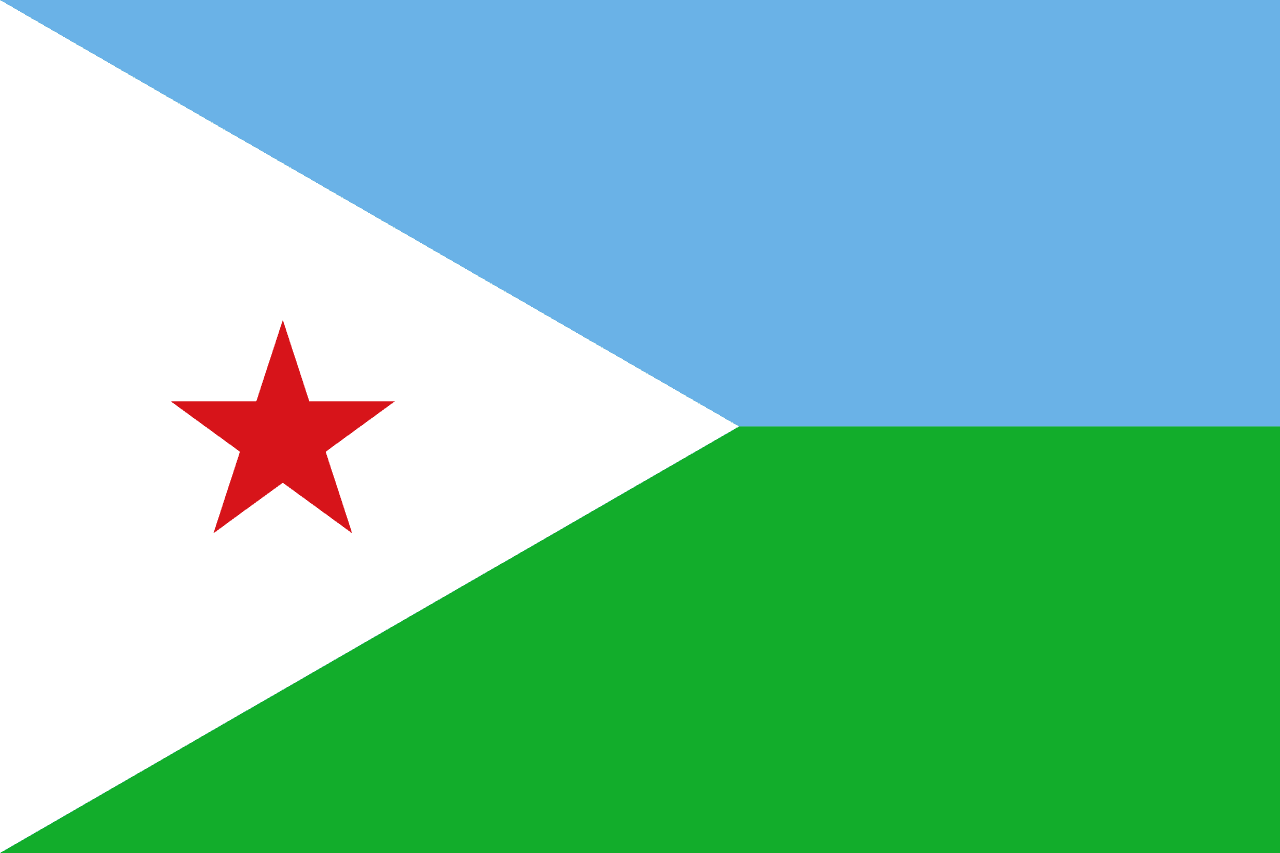
Djibouti: Where the Afar Triangle Meets the Gulf of Aden
🌐 Translate:
Djibouti sits at one of the world's most strategically important points — the Bab-el-Mandeb strait connecting the Red Sea to the Gulf of Aden, through which approximately 30 percent of global shipping passes annually. The country of fewer than a million people hosts military bases from France, the United States, China, Italy, and Japan — more foreign military installations per square kilometre than almost anywhere on earth. Its strategic value to multiple great powers is the primary economic fact of its existence.
Lake Assal is the lowest point in Africa and the third lowest on earth, at 155 metres below sea level. It is also ten times saltier than the ocean — one of the saltiest bodies of water on the planet. The salt flats surrounding it, brilliant white against the black volcanic rock, have been harvested by the Afar people for centuries. The Afar nomads of Djibouti and neighbouring Ethiopia are among the world's most heat-adapted peoples, living in the Danakil Depression — one of the hottest and most geologically active places on earth, where temperatures regularly exceed 50 degrees Celsius.
Somali and Afar culture coexist in Djibouti, each with distinct traditions of oral poetry, music, and pastoral life. The Afar culture of the interior is built on camel herding, warrior traditions, and a social structure centred on clan identity. The Somali culture of the coastal towns and Djibouti City has a more urban, commercial character shaped by centuries of Indian Ocean trade. The coffee in Djibouti — served Ethiopian-style or Somali-style depending on the neighbourhood — is excellent.