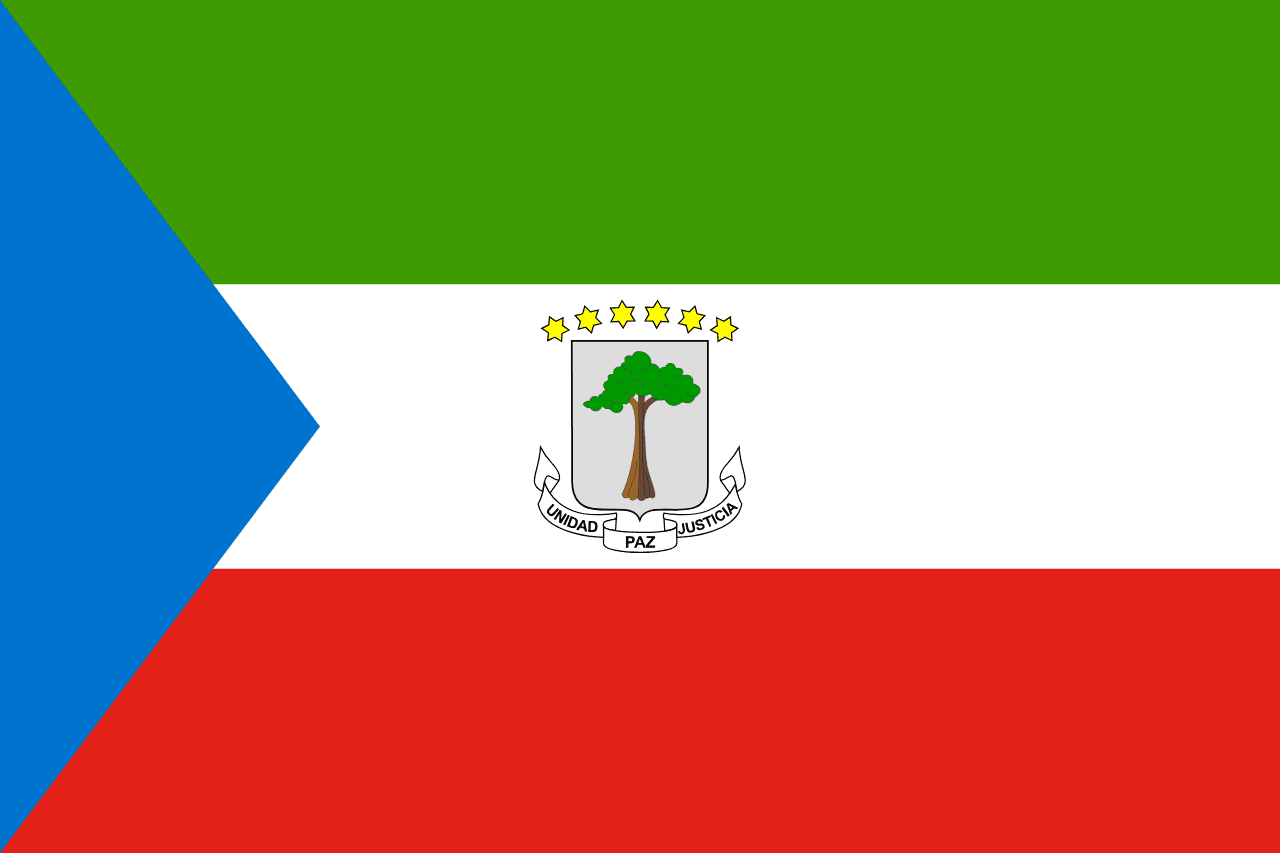
Equatorial Guinea is one of Africa's most unusual countries — the continent's only Spanish-speaking nation, and one of its most geographically divided. The mainland territory of Rio Muni is sandwiched between Cameroon and Gabon on the Gulf of Guinea coast, while the island of Bioko sits 160 kilometres offshore, close to the coast of Cameroon. The two parts share a flag and a government but different ecosystems, cultures, and personalities.
Bioko Island is the more visited of the two territories. Malabo, the capital, occupies the northern shore of an ancient volcanic caldera, and its Spanish colonial architecture — faded but still visible in the Cathedral, the Presidential Palace, and the old city grid — gives it a character unlike most African capitals. The island's real draw, however, is the volcanic rainforest of its southern half, one of the most biodiverse and least-disturbed forest environments in Africa. The Bioko Biodiversity Protection Program has worked for decades to protect drills, red-eared guenons, and several endemic primate species. Sea turtles nest in enormous numbers on the beaches of the southern coast in one of the most significant sea turtle nesting concentrations in the Atlantic.
Monte Alen National Park on the mainland protects a large swathe of lowland tropical rainforest within the Congo Basin ecosystem. Gorillas, forest elephants, mandrills, and bongo antelope live in the park, which sees very few visitors. Infrastructure is basic, but for serious wildlife travellers this represents genuine frontier ecotourism in one of Africa's most intact forest systems.
Bata on the mainland coast is the country's largest city and more commercially active than Malabo. The surrounding coastline offers stretches of Atlantic beach with few facilities but considerable natural beauty.
Equatoguinean cuisine shows Spanish, African, and local Fang and Bubi influences. Grilled meats and fresh fish dishes along the coast are common, alongside plantain, cassava, and palm oil preparations characteristic of the wider Gulf of Guinea region.
The best time to visit is during the drier months from June to August, when the main rainy season has eased.