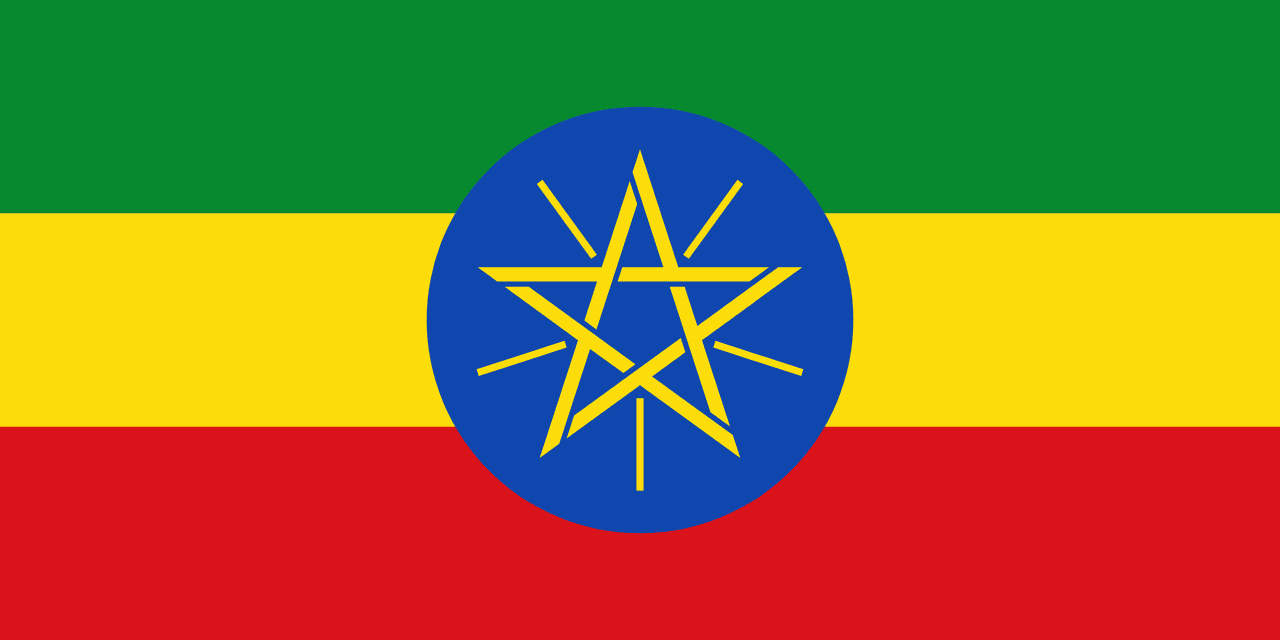
The History of Ethiopia: From Ancient Times to Today
🌐 Translate:
**The History of Ethiopia: From Ancient Times to Today**
Nestled in the Horn of Africa, Ethiopia is a land of rich cultural heritage and deep-rooted history that stretches back thousands of years. Often called the cradle of humanity, this vibrant nation has been home to some of the earliest hominids, as well as remarkable civilizations and empires. From its ancient kingdoms to its modern-day struggles and triumphs, Ethiopia's story is one of resilience and pride, woven together with threads of faith, conflict, and unity.
**Ancient and Indigenous Roots**
The story of Ethiopia begins not merely with kingdoms and emperors but with the early hominids that roamed its highlands and valleys. The discovery of *Australopithecus afarensis*, famously known as "Lucy," in 1974 in the Afar region confirmed Ethiopia's role as a critical point in human evolution. Dating back over 3 million years, Lucy's discovery provided a window into our distant past, showcasing humanity's long-standing connection to this remarkable land.
Fast forward to the 1st millennium BCE, and the Kingdom of D'mt emerged in northern Ethiopia, laying the groundwork for what would become a succession of influential empires. The D'mt civilization was characterized by its impressive stone architecture and intricate trade networks that connected it to the larger regions of the Arabian Peninsula and beyond.
However, it was the rise of the Kingdom of Aksum in the 4th century CE that marked a pivotal moment in Ethiopia's history. Aksum was one of the great trading empires of the ancient world, thriving on commerce that extended across the Red Sea to Egypt, Arabia, and the Mediterranean. The kingdom was notable for its monumental obelisks, which still stand today as testament to its architectural prowess. It was during this period that Ethiopia adopted Christianity as a state religion, with King Ezana proclaiming it in the early 4th century, making Ethiopia one of the first nations in the world to do so.
**The Glory of Aksum and the Spread of Christianity**
The Aksumite Empire expanded its influence across the region, both through trade and military prowess. Its strategic location allowed for the flourishing of commerce, with goods like ivory, gold, and spices being exchanged for silk and other luxuries. The intricate trade routes established during this period helped to position Ethiopia as a cultural and economic hub in East Africa.
Ezana, often regarded as the empire's most prominent ruler, is credited with not only spreading Christianity but also establishing the Ge'ez script, which is still used in the liturgical language of the Ethiopian Orthodox Church. The Ethiopian Church became a pillar of national identity, intertwining faith with the nation’s narrative and enumerating Ethiopia's unique place in the Christian world. Unlike many other African nations, Ethiopia maintained its independence during the era of European colonization, largely due to its strong cultural identity and the deep-rooted Christian faith of its people.
**The Rise of the Solomonic Dynasty**
Following the decline of Aksum in the 7th century, due to factors such as climate change and the rise of Islam, Ethiopia underwent significant transformations. The region fragmented into various smaller kingdoms. However, a new chapter began with the rise of the Solomonic Dynasty in the late 13th century, claiming descent from the biblical King Solomon and the Queen of Sheba. This dynasty would rule for several centuries and is often associated with Ethiopia’s cultural renaissance.
Under the leadership of Emperor Menelik II in the late 19th century, Ethiopia successfully resisted colonization during the Scramble for Africa. In the famous Battle of Adwa in 1896, Menelik’s forces dealt a resounding defeat to the invading Italian army, securing Ethiopia's sovereignty. This victory not only cemented Menelik's legacy but also became a symbol of resistance for many colonized nations.
**Colonial Encounters and the Italian Invasion**
Ethiopia's unique position in the political landscape of Africa made it a target for colonial ambitions. While much of the continent fell under European control, Ethiopia stood as a solitary nation through much of the late 19th and early 20th centuries. However, in 1935, Italy, under Benito Mussolini, launched a brutal invasion of Ethiopia.
The Second Italo-Ethiopian War saw the deployment of modern military tactics and chemical warfare against Ethiopian forces, leading to significant devastation. Despite fierce resistance from Ethiopian patriots, the occupation lasted until 1941, when Allied forces, with the help of Ethiopian troops, liberated the country. During this time, Haile Selassie, the last emperor of Ethiopia, became an enduring symbol of Ethiopian nationalism and resistance against colonialism.
**Modern Formation and the Derg Regime**
The post-World War II period was marked by significant political change in Ethiopia. In 1941, Haile Selassie was restored to the throne, and he sought to modernize the nation while fostering unity among its diverse ethnic groups. However, his reign faced challenges, including famine, social unrest, and economic difficulties, leading to widespread discontent.
In 1974, a military coup known as the Derg, led by Colonel Mengistu Haile Mariam, overthrew Selassie and established a Marxist-Leninist regime. The Derg's rule was characterized by brutal repression, land nationalization, and attempts to eliminate feudalism. Under Mengistu, thousands of perceived opponents were murdered in a campaign known as the "Red Terror." The regime's policies led to famine in the 1980s, resulting in the deaths of millions and drawing international condemnation.
**The Birth of Modern Ethiopia**
The Derg’s oppressive rule ultimately led to its downfall. By the early 1990s, armed resistance movements, including the Ethiopian People's Revolutionary Democratic Front (EPRDF), succeeded in overthrowing Mengistu. In 1991, Ethiopia entered a new era, marked by the establishment of a federal democratic republic.
Under the leadership of Prime Minister Meles Zenawi, the country witnessed significant economic growth and infrastructural development. However, the EPRDF's rule also faced criticism for its authoritarian tendencies and suppression of dissent. Ethnic tensions simmered, as various groups sought greater autonomy and representation within the federal system.
**Ethiopia Today: A Tapestry of Cultures and Challenges**
Today, Ethiopia is a nation at a crossroads. With a population exceeding 110 million, it is one of the fastest-growing economies in Africa, driven by agriculture and an emerging manufacturing sector. However, the fabric of Ethiopian society is complex, interwoven with the threads of over 80 distinct ethnic groups, each with its own languages, traditions, and aspirations.
The recent years have seen rising ethnic nationalism, leading to tensions and violence in various regions. The situation was exacerbated by the conflict in the Tigray region, which began in late 2020 and led to widespread humanitarian crises. This conflict has drawn attention from the international community, highlighting the urgent need for reconciliation and healing in a nation steeped in rich history yet grappling with significant challenges.
Ethiopia's historical legacy continues to influence its identity. The pride in being a nation that has never been colonized reverberates through its people, fueling aspirations for unity and progress. The country's unique cultural heritage, from its ancient churches hewn from rock in Lalibela to its vibrant festivals like Timkat, stands as a testament to the resilience of its people.
In conclusion, the history of Ethiopia is not just a tale of ancient kingdoms and modern struggles; it is a narrative of a people whose journey through adversity and triumph has shaped a nation known for its rich diversity and historical significance. As Ethiopia moves forward, it carries the weight of its past while embracing the promise of its future—a future where the echoes of ancient civilizations reverberate in the hearts and minds of its people, propelling them towards unity, peace, and prosperity.