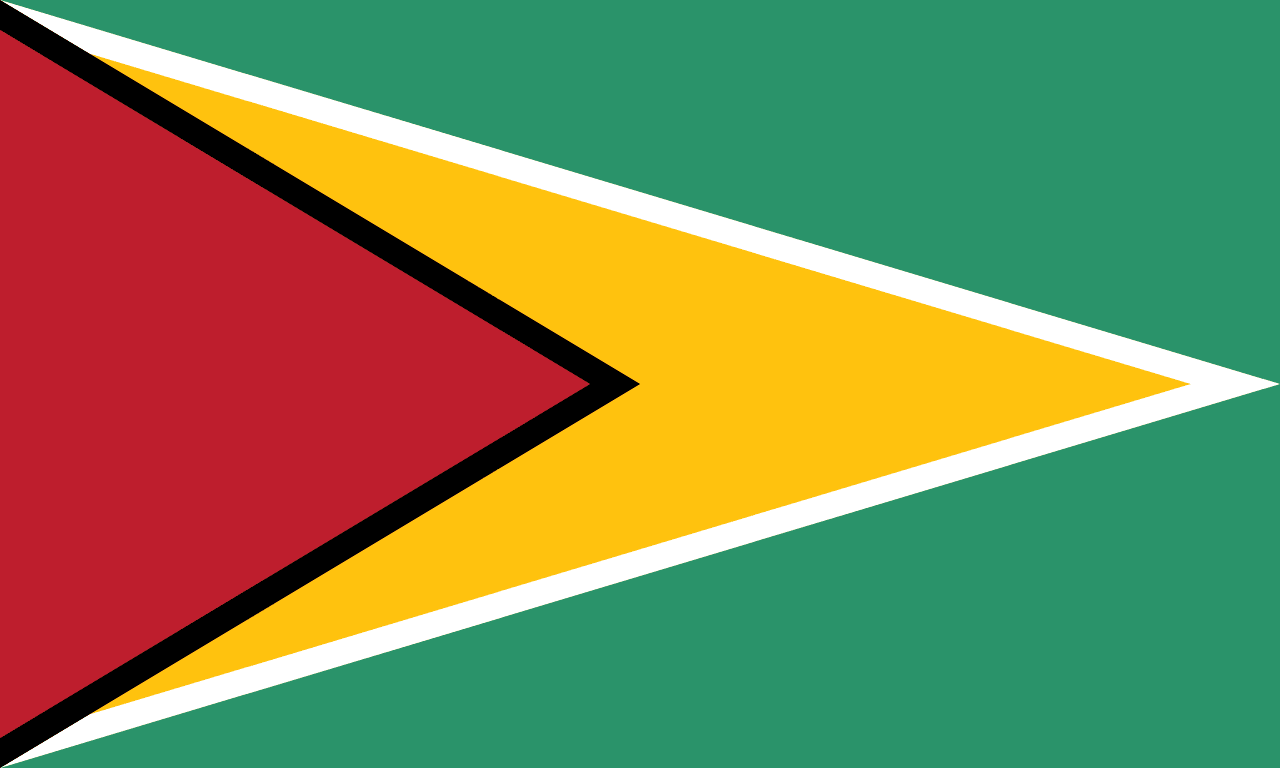
Guyana is South America's hidden frontier, a country where rainforest covers more than 80 percent of the land and wildlife roams in densities that rival anywhere on the continent. English-speaking, Caribbean in culture, and South American in geography, Guyana offers travelers something genuinely rare: a vast, intact wilderness with very few other people in it.
The Rupununi Savanna in the south is one of Guyana's most spectacular regions. This sweeping grassland borders Brazil and harbors giant river otters, giant anteaters, tapirs, capybaras, and jaguars. The Iwokrama Rainforest, a 371,000-hectare protected reserve in the center of the country, offers canopy walkways and river safaris where black caimans lounge on banks and harpy eagles soar overhead.
Kaieteur Falls is Guyana's single most dramatic sight and one of the world's great waterfalls. The Potaro River drops 226 meters in a single unbroken plunge — nearly five times the height of Niagara — into a misty gorge deep in the jungle. Small chartered flights from Georgetown land at a grass airstrip nearby, and visitors often find themselves completely alone at the falls.
Georgetown, the capital, is a city of wooden colonial architecture reflecting its British, Dutch, and African heritage. St. George's Cathedral, built entirely of timber, claims to be the world's tallest wooden church. The Demerara River waterfront and the botanical gardens provide a slower pace amid the city's bustle.
Guyana's population is one of the most ethnically diverse in the Americas. This diversity shapes the food culture: curry is everywhere, roti wraps are a daily staple, pepperpot is the national dish, and cook-up rice is comfort food for every occasion.
The dry seasons — February to April and August to November — are best for travel. Guyana is for those who want South America without the crowds and wilderness without the polish.