# The History of India: From Ancient Times to Today
India, a land of kaleidoscopic cultures and rich historical tapestries, has seen the rise and fall of empires, the birth of philosophies, and the evolution of civilizations. To traverse the annals of Indian history is to embark on a journey through time—a journey marked by remarkable achievements, profound struggles, and an indomitable spirit that continues to define its people today.
## Ancient and Indigenous History
The history of India can be traced back to the Indus Valley Civilization (c. 3300–1300 BCE), one of the world's earliest urban cultures. Flourishing along the fertile banks of the Indus River, cities like Harappa and Mohenjo-Daro showcased advanced urban planning, sophisticated drainage systems, and impressive architectural feats. The people of this civilization traded extensively, creating a network that connected them with distant lands, including Mesopotamia. However, the reasons for their decline around 1900 BCE remain a tantalizing mystery, debated among historians for years.
Following the collapse of the Indus Valley Civilization, the Vedic period emerged (c. 1500–500 BCE), named after the sacred texts known as the Vedas. This era laid the philosophical and spiritual foundations of Indian society. The Vedic texts encapsulated a multitude of ideas, from rituals and hymns to early notions of philosophy and ethics. It was during this time that the caste system began to take shape, influencing social structures for centuries to come.
As the Vedic period unfolded, the rise of regional kingdoms began to take place. The Mahajanapadas, or the "great realms," emerged as powerful states, each with its own governance, culture, and identity. Among these, the kingdom of Magadha gained prominence, setting the stage for future empires and dynasties.
## The Age of Empires and Kingdoms
As we move forward in time, the ancient tapestry of India continued to unfold with the rise of vast empires. The Maurya Empire (c. 322–185 BCE), founded by Chandragupta Maurya, is one of the most significant. His grandson, Ashoka the Great, transformed the empire into a beacon of peace and tolerance. After witnessing the horrors of the Kalinga War, Ashoka adopted Buddhism, promoting its principles across his realm. His edicts, inscribed on rock pillars, spread messages of non-violence and compassion, leaving a profound impact on Indian society and beyond.
Following the Mauryas, the Gupta Empire (c. 240–550 CE) marked a golden age in Indian history. Known for its advancements in science, mathematics, and the arts, the Guptas contributed significantly to the intellectual legacy of the world. It was during this time that the concept of zero was developed, and Aryabhata, a renowned mathematician and astronomer, laid the groundwork for many modern scientific principles. This era produced masterpieces in literature, including the "Shakuntala" by Kalidasa, which still echoes through the corridors of time.
As the Gupta Empire waned, regional kingdoms like the Chalukyas, Cholas, and Rashtrakutas rose to prominence, each leaving their mark on art, architecture, and culture. The Chola dynasty, in particular, was known for its maritime prowess and trade, extending its influence as far as Southeast Asia. Temples built during this period, such as the Brihadeeswarar Temple in Thanjavur, stand testament to the architectural brilliance of the time.
## The Arrival of New Influences
The medieval period in India saw the arrival of new influences, notably from Islamic conquests. The establishment of the Delhi Sultanate in the 13th century marked a significant shift in the subcontinent's political landscape. This period brought forth a blend of cultures, leading to the syncretism of Hindu and Islamic traditions. Notable figures such as Alauddin Khilji, who implemented innovative reforms in administration and agriculture, and Muhammad Tughlaq, known for his bold but often controversial policies, shaped this era.
The Mughal Empire (1526–1857) would eventually eclipse the Sultanate, bringing forth an era characterized by grand architecture, prosperity, and cultural fusion. Founded by Babur, the Mughals reached their zenith under Akbar, who is often hailed as one of the greatest rulers in Indian history. His policies of religious tolerance and administrative reforms fostered a sense of unity among his diverse subjects. The Mughals transformed India’s landscape with architectural marvels, including the Taj Mahal, an emblem of love built by Shah Jahan in memory of his beloved wife, Mumtaz Mahal.
However, the Mughal Empire also faced challenges in the form of regional powers and emerging European interests. By the 18th century, the empire was in decline, giving rise to the Marathas, Sikhs, and other regional kingdoms, each vying for control over the subcontinent.
## The Colonial Era
The arrival of European powers in the 15th century brought about radical changes in India. The Portuguese were the first to establish a foothold, but it was the British East India Company that would leave an indelible mark on the subcontinent. By the 18th century, the Company had gradually expanded its influence, often using military force and strategic alliances to dominate various regions.
The Battle of Plassey in 1757 marked a turning point, as the British defeated the Nawab of Bengal and began to establish direct control over Indian territories. The resulting colonial rule was characterized by economic exploitation, social unrest, and a profound cultural impact. The British implemented policies that favored their industries, leading to deindustrialization and suffering for local artisans and farmers.
The struggle against colonial rule gave rise to a series of movements advocating for social reform and independence. Key figures like Raja Ram Mohan Roy, who championed women's rights and social justice, and Mahatma Gandhi, whose philosophy of non-violence galvanized millions, emerged as pivotal leaders. The 1919 Jallianwala Bagh massacre, where British troops opened fire on a peaceful gathering, ignited widespread outrage and intensified the fight for independence.
## The Road to Independence
The 1940s were a tumultuous time in Indian history. The Quit India Movement of 1942, spearheaded by Gandhi, called for an end to British rule. The struggle culminated in 1947 when India finally gained independence from British colonialism. However, this momentous achievement was marred by the partition of India and Pakistan, leading to one of the largest human migrations in history and widespread communal violence.
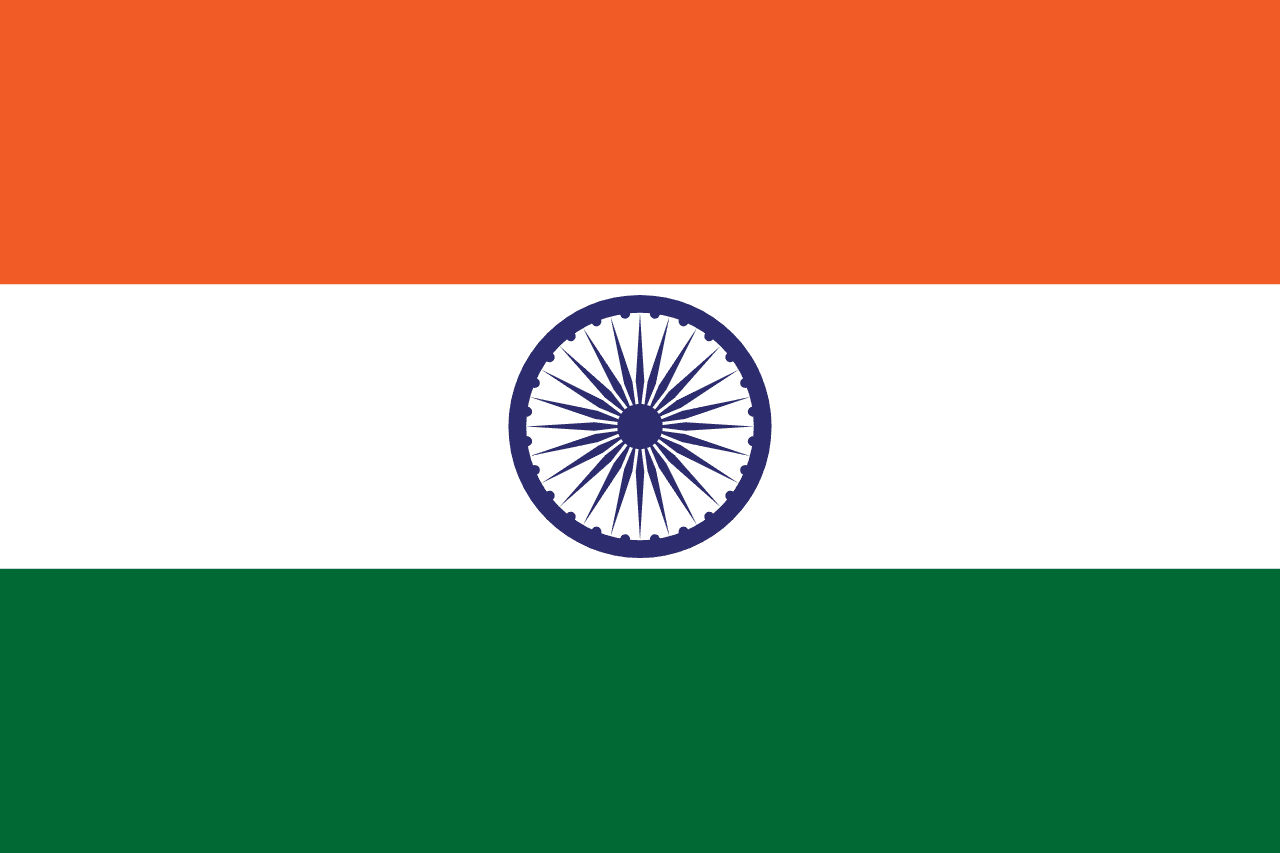
On August 15, 1947, as the Indian flag was hoisted, the nation stood on the brink of a new dawn. Leaders like Jawaharlal Nehru, the first Prime Minister of independent India, articulated a vision of a secular, democratic nation. The Constitution of India was adopted in 1950, enshrining the principles of justice, liberty, equality, and fraternity for all citizens.
## India Today
Fast forward to the present, and India has emerged as a vibrant democracy with a rich tapestry of cultures, languages, and traditions. With a population of over 1.4 billion, it is the world's largest democracy. The economy has transformed dramatically, evolving into one of the fastest-growing major economies globally, driven by sectors such as information technology, agriculture, and manufacturing.
However, the nation still grapples with challenges including poverty, inequality, and communal tensions. Yet, the spirit of resilience and unity continues to shine through. Movements advocating for social justice, environmental sustainability, and women’s empowerment are gaining momentum, reflecting the aspirations of a new generation.
India's cultural heritage remains a source of pride, as festivals like Diwali and Eid showcase its diversity. The country is home to numerous UNESCO World Heritage Sites, such as the ancient ruins of Hampi, the majestic forts of Rajasthan, and the serene backwaters of Kerala.
As we conclude this journey through India's history, we recognize that it is a story of convergence—of ideas, cultures, and peoples. From the ancient wisdom of the Indus Valley to the modern aspirations of its youth, India's narrative continues to evolve. It is a tapestry woven with threads of resilience, creativity, and hope, reminding us that history is not just about the past, but about the future we choose to create. The journey of India is far from over, and as it strides into the next chapter, it carries with it the lessons, legacies, and aspirations of millennia.