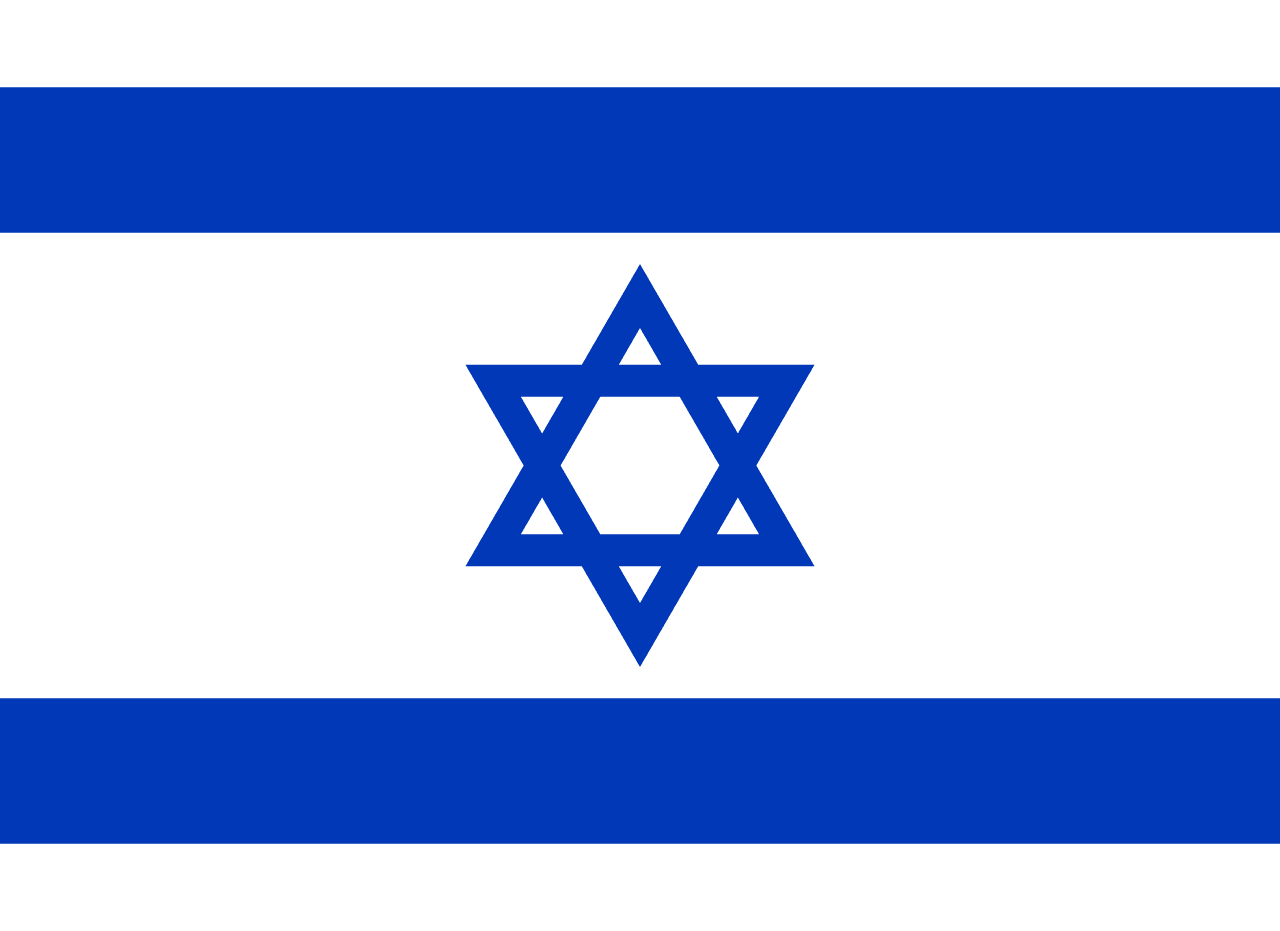
The History of Israel: From Ancient Times to Today
🌐 Translate:
# The History of Israel: From Ancient Times to Today
The land of Israel, often hailed as the cradle of civilization, has a rich tapestry of history that has shaped the world in profound ways. From ancient kingdoms to modern geopolitics, the history of Israel is a compelling narrative filled with triumph, conflict, and resilience. This journey through time will explore the millennia that have forged this remarkable land, highlighting the key figures, turning points, and lesser-known facts that contribute to its identity today.
## Ancient/The Indigenous History
The history of Israel begins thousands of years ago, rooted in the ancient Near East. Archaeological evidence suggests that the area has been inhabited since the Stone Age, but it is in the Bronze Age that we see the first signs of organized society. The Canaanites, the region’s indigenous people, established city-states that would later become significant in biblical narratives.
Around 1200 BCE, the Israelites emerged as a distinct group in this ancient land. According to biblical tradition, the Israelites were descendants of the patriarch Abraham, who is often referred to as the father of monotheism. The narrative continues with Moses, who led the Israelites out of slavery in Egypt and into the Promised Land—a journey that is celebrated in the Jewish festival of Passover.
By 1000 BCE, under the reign of King David, the Kingdom of Israel was established, marking a golden age of unity and strength. David’s son, Solomon, expanded the kingdom and commissioned the First Temple in Jerusalem, which became the focal point of Jewish worship and identity. The grandeur of this era, however, was not to last; following Solomon’s death, the kingdom split into two: Israel in the north and Judah in the south. This division weakened both realms and left them vulnerable to external threats.
The Assyrian Empire conquered the northern kingdom in 722 BCE, leading to the exile of many Israelites. Meanwhile, Judah remained for another century before succumbing to the Babylonian Empire. In 586 BCE, Jerusalem fell, and the First Temple was destroyed, marking a significant turning point in Jewish history known as the Babylonian Exile. This period of displacement became a pivotal moment for Jewish identity, as the roots of Judaism began to take shape amid adversity.
## Major Empires and Kingdoms
As empires rose and fell, the land that would become Israel was caught in the crossfire of history. After the fall of Babylon, the Persian Empire allowed the Jews to return to Jerusalem and rebuild the Temple in 516 BCE, symbolizing a new dawn of hope. This period marked the beginning of the Second Temple era, which would last for nearly six centuries.
The land soon came under Hellenistic influence following Alexander the Great's conquests in the 4th century BCE. This ushered in the era of the Seleucid Empire, where cultural and religious tensions simmered beneath the surface. The Maccabean Revolt (167-160 BCE) against the Seleucids established a brief period of Jewish independence, leading to the establishment of the Hasmonean Kingdom.
Yet, peace was short-lived. The Roman Empire expanded and, in 63 BCE, General Pompey captured Jerusalem. This marked the beginning of a tumultuous relationship between the Jews and the Romans, culminating in the destruction of the Second Temple in 70 CE during the First Jewish-Roman War. This event was cataclysmic; it not only signified the loss of the center of Jewish worship but also led to the dispersion of Jewish communities around the world, a phenomenon known as the Diaspora.
## The Colonial Period
For the next several centuries, the region fell under various empires, including the Byzantine, Islamic Caliphates, Crusaders, and Ottoman Empires. Each left its mark on the land and its people. By the late 19th century, as nationalism surged across Europe, Jewish communities began to seek a return to their ancestral homeland, fueled by the Zionist movement founded by Theodor Herzl. Herzl’s vision was not just to create a refuge for persecuted Jews but to revive the cultural and historical identity of the Jewish people.
During this period, the Jewish population in Palestine gradually increased, coinciding with the waves of Jewish immigrants known as Aliyahs. The local Arab population, who had been living in the region for centuries, began to perceive this influx with apprehension, leading to growing tensions that would have lasting implications.
The situation escalated with the onset of World War I. The British, seeking to gain support in the war, issued the Balfour Declaration in 1917, expressing their support for the establishment of a “national home for the Jewish people” in Palestine. The declaration is often seen as a turning point, setting the stage for further conflict as both Jews and Arabs laid claim to the land.
After the war, the League of Nations granted Britain the mandate over Palestine, and the British attempted to balance the conflicting aspirations of Jews and Arabs. However, the mandate period (1920-1948) was tumultuous, characterized by violence and uprisings from both communities, such as the Arab riots of 1929 and the 1936-1939 Arab revolt.
## Independence and Modern Formation
The Holocaust during World War II was a horrific reminder of the dire need for a Jewish homeland. It galvanized international support for the Zionist cause. In 1947, the United Nations proposed a partition plan to create separate Jewish and Arab states. The Jewish leadership accepted the plan, but it was rejected by the Arab states, leading to rising tensions.
On May 14, 1948, David Ben-Gurion declared the establishment of the State of Israel, a moment that would change the course of history. Almost immediately, neighboring Arab states invaded, resulting in the Arab-Israeli War of 1948. Despite being outnumbered, the Israeli forces managed to defend the new state, a testament to their determination and resilience.
The war resulted in significant territorial gains for Israel, but it also created a large number of Palestinian refugees, a situation that remains a core issue in the Israeli-Palestinian conflict today. Israel’s independence was celebrated, yet it was accompanied by deep divisions and ongoing tensions that would shape the region for decades.
In the following years, Israel experienced a series of conflicts, including the Suez Crisis (1956), the Six-Day War (1967), and the Yom Kippur War (1973). The Six-Day War in particular was a turning point, as Israel captured the West Bank, Gaza Strip, Sinai Peninsula, and Golan Heights, significantly altering the map and the dynamics of the region.
## Israel Today
Fast-forward to the 21st century, and Israel stands as a vibrant democracy and a technological powerhouse in the Middle East. It has a diverse society that includes Jews from various backgrounds, as well as significant Arab and other minority populations. The country is known for its innovations in technology, agriculture, and medicine, earning it the title of "Startup Nation."
However, the challenges remain formidable. The Israeli-Palestinian conflict continues to be a source of tension, characterized by disputes over territory, security, and mutual recognition. Efforts at peace, such as the Oslo Accords in the 1990s and various negotiations, have yielded limited success, with deep-seated mistrust on both sides.
Lesser-known historical facts reveal the complexity of Israel’s identity. For instance, the influence of the Ethiopian Jewish community, who made an extraordinary journey to Israel during Operation Moses in the 1980s, adds another layer to the multicultural fabric of the nation. Similarly, the historical connections of the Druze and Bedouin communities to the land highlight the diverse narratives that coexist in this small but significant region.
As we reflect on the history of Israel, it becomes clear that this land is steeped in stories of trials and triumphs, of ancient roots and modern aspirations. The journey from ancient kingdoms to a contemporary state is a testament to the enduring spirit of its people. The story of Israel is not merely a narrative of conflict and division; it is also a story of resilience, diversity, and the relentless pursuit of a hopeful future.
In understanding its history, we gain insight into the complexities of the region and the ongoing quest for peace, coexistence, and identity that continues to shape Israel today.