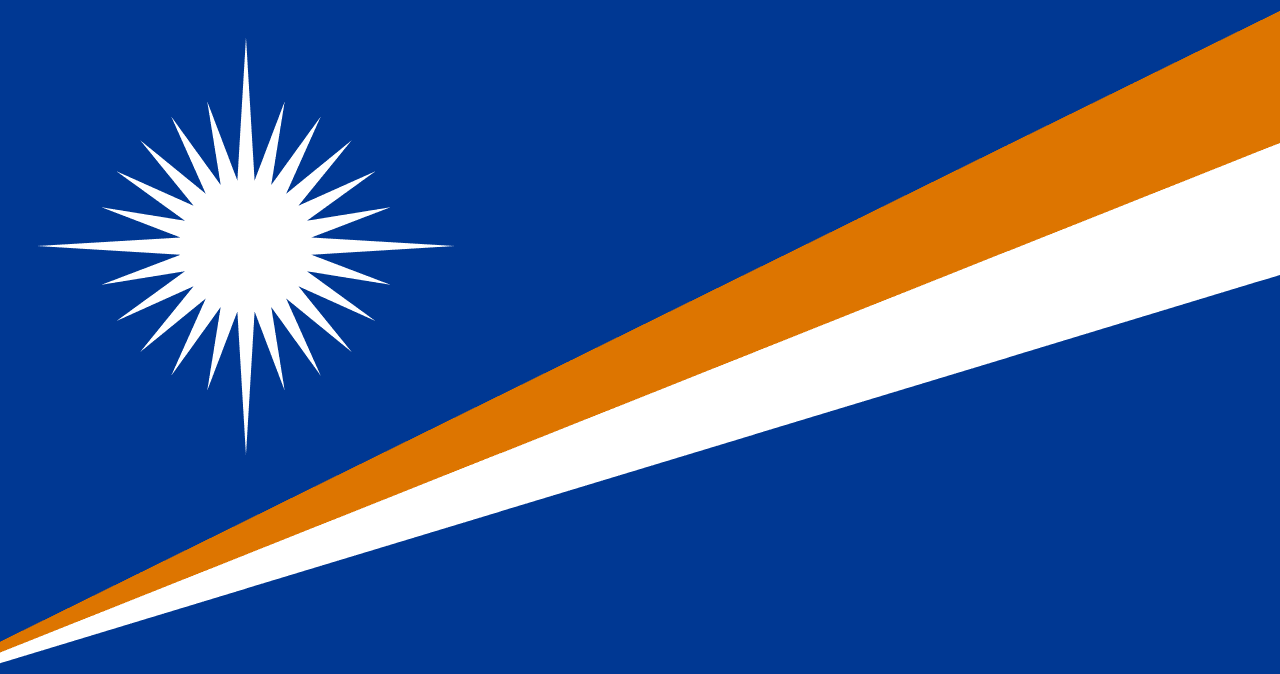
The Marshall Islands is a vast Pacific nation that occupies an enormous area of ocean while consisting almost entirely of low-lying coral atolls and reef islands. Located north of the equator roughly halfway between Hawaii and Australia, the country comprises 29 atolls and 5 single islands, totaling just 181 square kilometers of land but spread across nearly two million square kilometers of ocean. It is one of the Pacific's least-visited nations and one of its most threatened by sea-level rise.
Majuro, the capital atoll, sits on a thin ribbon of land barely wide enough in places for a road to run between the lagoon and the open ocean. The lagoon side is lined with traditional canoe-building workshops, where master navigators still build outrigger vessels using techniques passed down across generations. Marshallese traditional navigation — using stick charts to map wave patterns, star paths, and current interactions — is one of the most sophisticated wayfinding systems ever developed by any maritime culture.
The Bikini Atoll, a UNESCO World Heritage Site, carries one of the most haunting histories in the Pacific. Between 1946 and 1958, the United States conducted 23 nuclear bomb tests here, including the first hydrogen bomb test. The atoll was evacuated and has never been permanently resettled. Today the lagoon offers extraordinary wreck diving — the USS Saratoga, a massive aircraft carrier sunk in a 1946 test, lies in shallow water and is considered one of the world's most dramatic wreck dives. The ghostly underwater landscape, where fish now swarm through radioactive but otherwise pristine water, is unforgettable.
Arno Atoll, near Majuro, is accessible by boat and offers a glimpse of remote atoll life with turquoise lagoons, thatch-roofed villages, and world-class bonefishing on the flats.
The culture of the Marshall Islands is matrilineal — land passes through women, and family structure centers on the mother's line. Traditional weaving of pandanus mats and baskets, navigation training, and communal fishing remain central to Marshallese identity despite significant American cultural influence following decades of US administration.
The food combines Pacific staples — breadfruit, coconut, taro, and lagoon fish — with American canned goods that arrived during the post-war period.
The best time to visit is January through April, when rainfall is lower and the seas are calmer for inter-atoll travel.