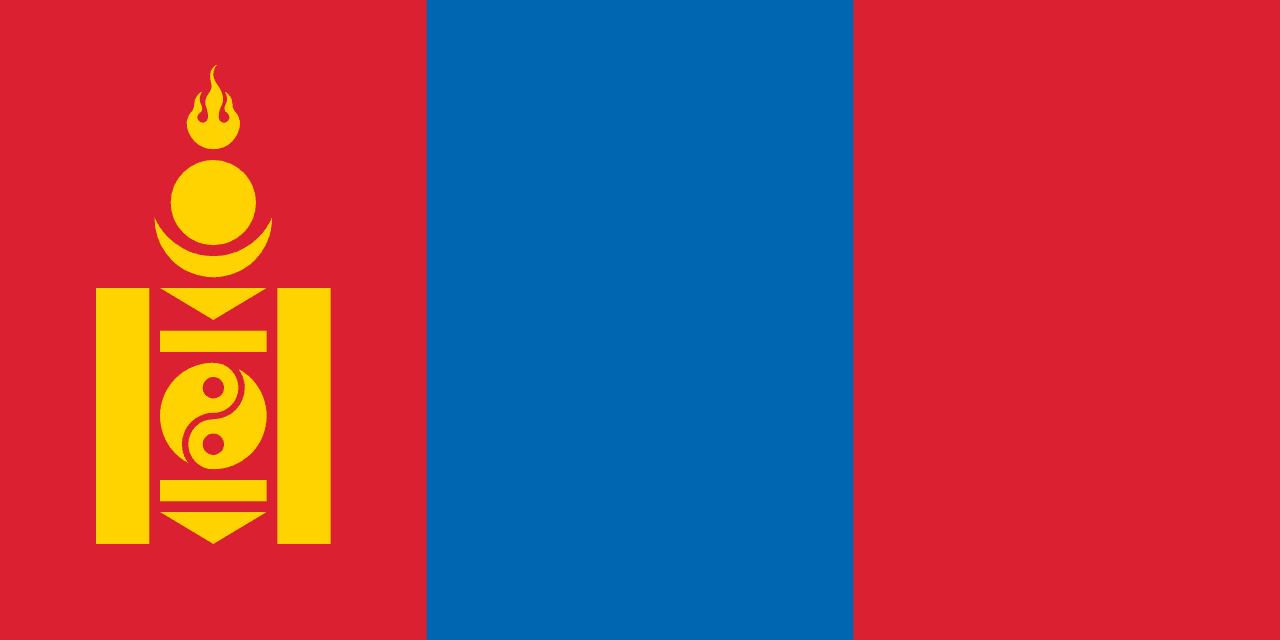
Mongolia is one of the world's last great wildernesses — a vast, thinly populated land of steppe, desert, and mountain that stretches between Russia to the north and China to the south. It is the most sparsely populated sovereign nation on Earth, with just 3.3 million people occupying a country larger than Western Europe. That emptiness is both Mongolia's defining characteristic and its most extraordinary gift to travelers.
The Gobi Desert, covering the southern third of the country, is not the sand sea many imagine but rather a cold, high-altitude desert of gravel plains, rocky escarpments, and scattered dunes. The Khongoryn Els sand dunes in the Gobi Gurvan Saikhan National Park rise to 300 meters and emit a singing sound in the wind. The Flaming Cliffs at Bayanzag are the site where dinosaur eggs were first discovered in the 1920s by Roy Chapman Andrews, and fossils still erode from the red sandstone regularly.
The Khövsgöl Lake region in the north is Mongolia's answer to Switzerland and Siberia combined — a vast alpine lake of crystal-clear freshwater, the second-largest freshwater lake in Asia by volume, surrounded by taiga forest, mountains, and nomadic reindeer herders, the Tsaatan people, who still live entirely on the migration patterns of their animals.
The Orkhon Valley, a UNESCO World Heritage Site in central Mongolia, was the heart of both the Xiongnu and later Mongol empires. The ruins of Karakorum, Genghis Khan's capital built in the 13th century, lie near the Erdene Zuu monastery, the first Buddhist monastery in Mongolia, whose walls are built from stones salvaged from the imperial city.
Naadam, the summer festival held every July in Ulaanbaatar, showcases Mongolia's three "manly games" — wrestling, horse racing, and archery. The horse racing involves children as jockeys racing across 25 kilometers of open steppe in one of the world's most spectacular sporting events.
Mongolian food is protein-heavy and deeply adapted to the nomadic lifestyle: mutton, dairy products like airag (fermented mare's milk), and noodle soups fill the diet.
The best time to visit is June through August, when the steppe is green and Naadam takes place. Winter is brutally cold but spectacular.