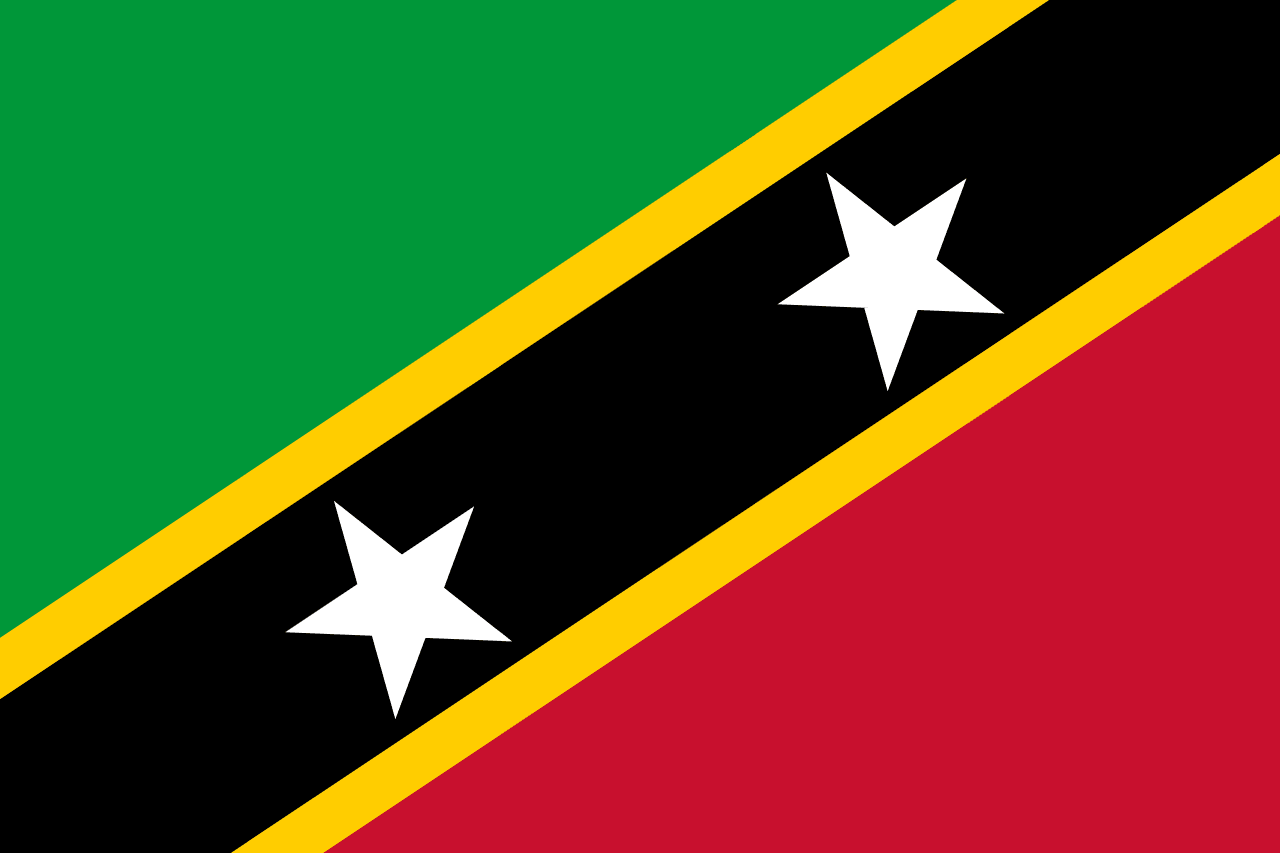
Saint Kitts and Nevis: The Federation That Survived Sugar's End
🌐 Translate:
Saint Kitts and Nevis is the smallest sovereign state in the Americas by both area and population — a two-island federation of 56,000 people in the northern Leeward Islands. Saint Kitts was among the first Caribbean islands colonised by the British, in 1623, and became one of the most important sugar-producing islands in the world during the 18th century. The sugar economy that defined the island for three centuries finally ended in 2005 when the last sugar estate closed, leaving behind the physical infrastructure of a plantation economy — great houses, windmill towers, and the Brimstone Hill Fortress — and a population that had to build a new economic identity.
Brimstone Hill Fortress National Park is a UNESCO World Heritage site — a massive fortification built by African slave labour on the slopes of a volcanic cone 790 feet above sea level, completed by the British over a century of construction and considered one of the best-preserved 17th and 18th century fortifications in the Americas. The view from the top encompasses the sea, neighbouring Nevis, and on clear days, several other Caribbean islands. The scale and completeness of the fortress is striking given the size of the island it protected.
Nevis — the smaller island, connected to Saint Kitts by a 3-kilometre channel — is the birthplace of Alexander Hamilton, the American Founding Father whose face now appears on the ten-dollar bill. The Alexander Hamilton Birthplace Museum occupies the site of the estate where he was born in 1755. The connection between this small Caribbean island and American financial history is one of the more unlikely biographical facts in the Americas.