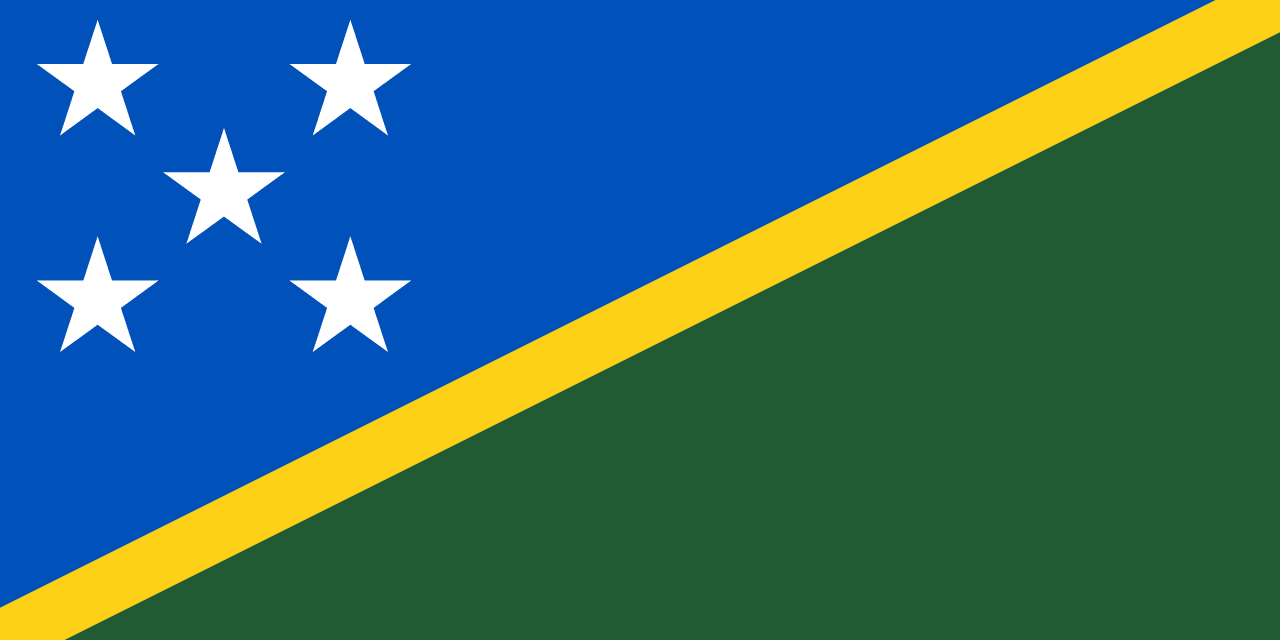
The Solomon Islands are an archipelago of nearly 1,000 islands scattered across the southwestern Pacific, northeast of Australia and east of Papua New Guinea. They comprise some of the most remote, pristine, and culturally rich islands in the Pacific Ocean, where ancient traditions remain vibrantly alive, coral reefs rank among the world's finest, and the legacy of some of the most intense naval combat of World War Two lies on the seabed in extraordinary density.
Honiara, the capital on Guadalcanal island, carries the weight of World War Two history heavily. The Battle of Guadalcanal in 1942-43 was one of the most pivotal campaigns of the Pacific War, and its relics are everywhere — rusting hulks of aircraft in the jungle, American and Japanese war cemeteries, and the waters of Iron Bottom Sound, named for the staggering number of warships sunk there. The American Memorial and the Vilu War Museum preserve this history. Diving on the wrecks — including the massive Japanese transport ship Kinugawa Maru on the north coast of Guadalcanal — is world-class.
Beyond the war history, the Solomon Islands' marine environment is extraordinary. Marovo Lagoon in the Western Province, shared with New Georgia Island, is the world's largest saltwater lagoon enclosed by a double barrier reef and is a UNESCO-nominated site. The coral formations, fish diversity, and water clarity inside the lagoon make it one of the finest diving destinations in the Pacific. Dolphins, manta rays, and sharks patrol the channels between volcanic islands.
The traditional cultures of the Solomon Islands are remarkably diverse and largely intact. The island of Malaita maintains traditions including shell money production and artificial island building that have continued for centuries. The bonito cult of Lau Lagoon involves elaborate ceremonies around the hunting of the skipjack tuna. Traditional wooden carvings inlaid with nautilus shell, ceremonial shields, and elaborately decorated war canoes represent some of the Pacific's finest traditional art.
The Arnavon Islands Marine Conservation Area protects one of the world's largest nesting populations of hawksbill sea turtles, managed through a rare partnership between local communities, the government, and conservation organizations.
Solomon Islander cuisine centers on fresh fish, sweet potato, taro, cassava, and coconut in various preparations. The best time to visit is April through October during the drier season when diving visibility is at its best.