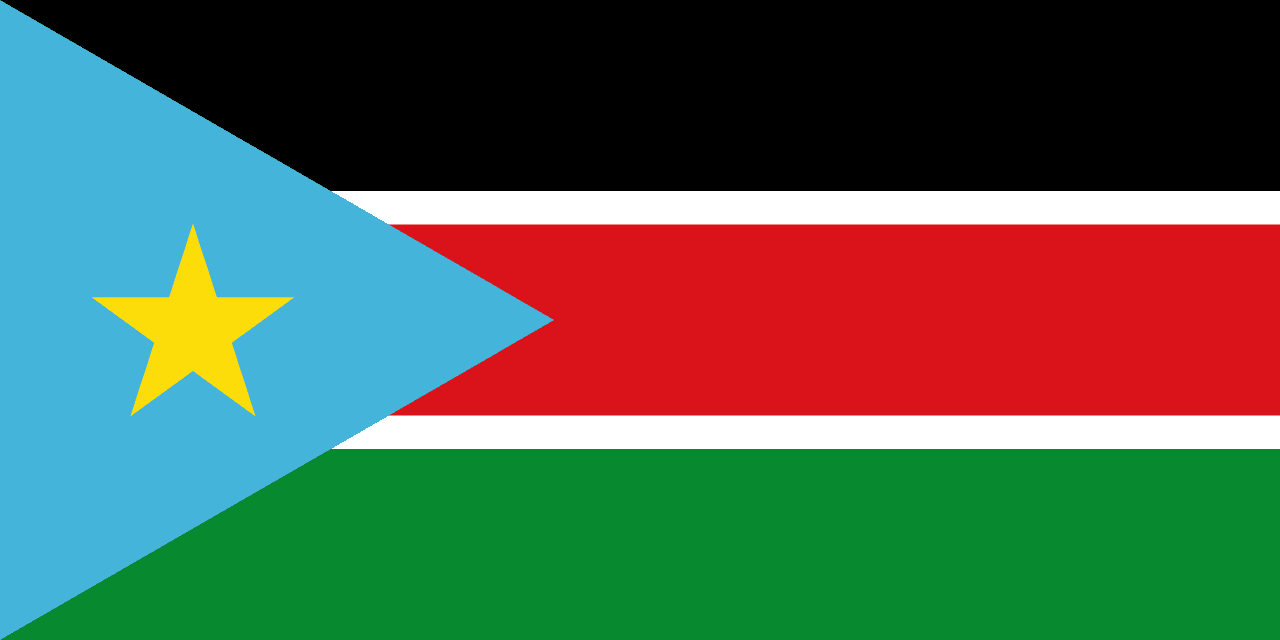
South Sudan is the world's newest country, born from a hard-won independence referendum in 2011. Its short life as a nation has been turbulent — civil conflict has marked much of its recent history — but for the rare traveller who arrives in stable times, South Sudan reveals a land of extraordinary wildlife, ancient river culture and a people of remarkable resilience and openness.
The country sits astride the White Nile, which flows north through swamps and grasslands that form some of Africa's last truly wild places. The Sudd — one of the world's largest freshwater wetlands — stretches across vast areas of the south, filtering the Nile's waters through papyrus and floating islands. It is one of Africa's great wilderness expanses, largely unknown to the outside world.
Boma National Park, in the southeast near the Ethiopian border, hosts one of the largest land animal migrations on the continent. Each year, hundreds of thousands of white-eared kob, tiang antelope and Mongalla gazelle move across the plains in a spectacle comparable to the Serengeti's Great Migration — but witnessed by almost no visitors. Elephants, buffalo, lions and giraffes also roam these grasslands.
The Dinka and Nuer peoples — the two largest ethnic groups — maintain cattle-keeping cultures of extraordinary visual richness. Dinka herdsmen are among the tallest people on Earth and adorn their cattle with elaborate horn shapes and ash rubbed into elaborate patterns. Their relationship with cattle is spiritual as much as economic — cattle are currency, dowry and devotion. Observing this culture with respectful curiosity is a window into a way of life with ancient roots.
Nimule National Park on the Ugandan border is the most accessible wildlife area, with hippos, Nile crocodiles and Uganda kob in relatively easily reached river habitats. The town of Nimule itself is a gateway between Uganda and South Sudan, relatively calm and a useful base.
Juba, the capital, sits on the west bank of the Nile and has grown rapidly since independence. Its market, the Konyo Konyo, is chaotic, colourful and full of goods flowing in from Uganda, Kenya and the DRC. Restaurants serving grilled Nile perch, injera and various stews reflect the city's multicultural character.
The Nile at Juba offers simple boat rides that give a sense of this great river's scale — wide, unhurried, brown with silt. On the far banks, fishermen in dugout canoes cast nets in the same way their ancestors have for thousands of years.
South Sudan's landscape includes highlands in Equatoria in the southwest — lush, green and cooler than the plains — where coffee is grown and waterfalls cascade into forest valleys. The Didinga Hills and Imatong Mountains offer trekking through terrain that sees almost no tourism.
Travelling to South Sudan requires careful preparation. Security conditions vary widely between regions and can change quickly. Humanitarian organisations maintain a significant presence in Juba and beyond. Travellers should consult up-to-date advisories, arrange appropriate permits, and travel with experienced local guides.
Those who come with patience and preparation discover a country that is still, in many ways, writing itself — figuring out what it means to be a nation after generations of war. The people who welcome visitors are not naive about their country's difficulties; they are proud of their survival and genuinely curious about the world outside.
South Sudan is not for the average tourist. But for travellers drawn to the edges — to places where nature remains vast, human culture remains ancient, and history is still being made — it is one of Africa's most extraordinary frontiers.