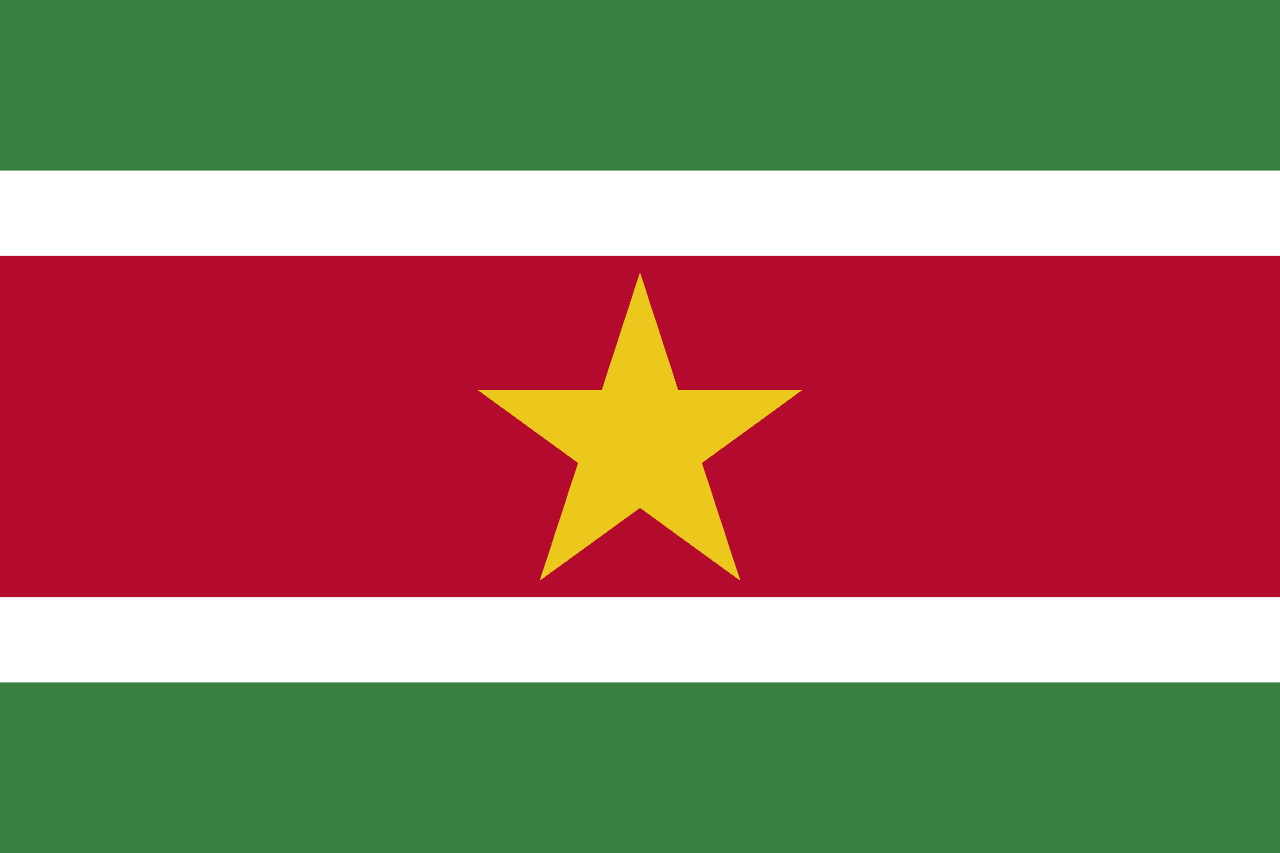
The History of Suriname: From Ancient Times to Today
🌐 Translate:
# The History of Suriname: From Ancient Times to Today
Nestled on the northeastern coast of South America, Suriname is a land steeped in rich history and cultural diversity. From ancient indigenous civilizations to a complex colonial past, and finally to its emergence as an independent nation, Suriname's story is a fascinating tapestry woven with the threads of resilience, adaptation, and vibrant cultural expression.
### Ancient Times: The Indigenous Heritage
Long before European explorers set foot on its shores, Suriname was inhabited by a mosaic of indigenous groups, including the Arawaks, Caribs, and Tupinambá. These tribes flourished in the lush landscapes of the region, living in harmony with the bountiful natural resources that surrounded them. The Arawaks were primarily farmers and fishers, cultivating crops such as cassava, sweet potatoes, and maize, while the Caribs, known for their seafaring skills, ventured into the Caribbean, trading goods and forging alliances.
The social structures of these tribes were rich and varied. The Arawaks, for instance, lived in communal longhouses and had a spiritual connection to the land, with deeply held beliefs in the spirits of nature. The Caribs, with their more militaristic orientation, created formidable societies that often engaged in territorial conflicts. These indigenous peoples not only laid the foundation of the land's cultural identity but also established complex systems of governance and trade that would influence future generations.
### The Era of European Exploration
In the late 15th century, the European Age of Exploration opened a new chapter in Suriname's history. The first recorded European encounter occurred in 1498 when the famed explorer Amerigo Vespucci sailed along the coastline. However, it wasn’t until the Dutch arrived in the early 17th century that the region saw significant European interest. The Dutch West India Company, aiming to expand its agricultural and trade networks, established a foothold in Suriname in 1667. They negotiated a treaty with the British, who had originally claimed the territory, leading to a significant shift in control.
The Dutch saw the agricultural potential of the region and began to establish plantations. Initially, they relied on indigenous labor, but as the demand for labor grew, they turned to enslaved Africans. This marked the beginning of a dark chapter in Suriname's history—the transatlantic slave trade. The Dutch brought thousands of enslaved people from West Africa to work on sugar, coffee, and cocoa plantations, transforming the landscape and the economy.
### The Plantations and the Enslaved: A Dark Chapter
The plantation economy flourished, with Suriname becoming one of the wealthiest colonies in the Americas during the 18th century. The cycle of exploitation and abuse against the enslaved population was relentless, leading to widespread discontent and resistance. Enslaved Africans organized revolts, the most notable being the 1763 Berlijn Revolt, which saw a group of enslaved people rise against their oppressors, led by a figure named Boni. His leadership and tactical prowess turned this rebellion into a symbol of the struggle for freedom.
Despite the brutality they faced, the enslaved Africans preserved their cultural heritage, blending African traditions with those of the indigenous peoples and European settlers. This cultural fusion gave rise to unique art forms, music, and cuisine, which remain integral to Suriname’s identity today. The legacy of these struggles for autonomy and self-determination is evident in the country’s modern society, where Afro-Surinamese culture plays a pivotal role.
### The Colonial Power Struggle
As the 18th century progressed, Suriname’s colonial status became a point of contention between European powers. The British briefly seized control of the colony in 1799, but the Dutch regained sovereignty in 1802. This back-and-forth highlighted the strategic significance of Suriname in the global colonial chess game.
In the early 19th century, the Dutch abolished slavery in their colonies in 1863, but the change came with significant challenges. Formerly enslaved individuals were required to work for another ten years on the plantations before they could fully embrace their freedom. This transitional period was fraught with economic difficulties, as plantation owners struggled to adapt to a labor system no longer based on enslavement.
### The Path to Independence
The early 20th century saw further social and political developments. Suriname began to rethink its colonial relationship with the Netherlands. The rise of nationalist sentiments among the diverse population, which now included Afro-Surinamese, Javanese, Chinese, and indigenous peoples, fueled the desire for greater autonomy. In 1954, Suriname was granted the status of an autonomous territory within the Kingdom of the Netherlands, allowing for a degree of self-governance.
The mid-20th century was marked by a surge of political activism, with leaders like Johan Ferrier, who became Suriname's first Prime Minister, advocating for full independence. The drive for sovereignty culminated in 1975 when Suriname officially gained independence from the Netherlands. This momentous occasion was celebrated with great fervor, marking a new chapter in the nation’s history.
### The Struggles of Nationhood
However, the newly independent Suriname faced significant challenges. The transition from a colony to a sovereign nation was not smooth. Economic instability, political strife, and social unrest plagued the country in the years that followed. A coup in 1980 led by military officer Dési Bouterse threw the nation into a period of authoritarian rule, marked by human rights abuses and suppression of dissent. During Bouterse's regime, Suriname experienced a civil war, fueled by the struggle between government forces and various insurgent groups. This turbulent era deeply scarred the nation, leaving lasting divisions within the society.
Despite these challenges, Suriname's cultural identity continued to evolve. The rich tapestry of ethnicities, religions, and languages formed a unique blend that characterized the nation. Festivals celebrating the diverse heritage of Suriname became vital expressions of cultural unity. The annual Keti Koti Festival, marking the emancipation of enslaved people, showcases the country's commitment to acknowledging its past while fostering an inclusive future.
### The Modern Era: Progress and Challenges
Stepping into the 21st century, Suriname embarked on a path of democratic reform and economic development. Political stability was gradually restored, and the nation began to explore its vast natural resources, particularly in mining and agriculture. Suriname's forests, rich in biodiversity, became focal points for sustainable development efforts, attracting international attention.
Yet, the country continues to grapple with the consequences of its colonial past and authoritarian rule. Economic disparities, corruption, and environmental challenges pose ongoing hurdles. The mismanagement of resources, particularly in the mining sector, has raised concerns about ecological degradation and the rights of indigenous communities.
Suriname's government is actively seeking to address these issues while balancing economic growth with environmental sustainability. The emphasis on eco-tourism and the preservation of its unique cultural heritage has opened new avenues for development, showcasing the country's natural beauty and rich history to the world.
### Conclusion: A Tapestry of Resilience
Suriname’s journey from ancient civilizations to a modern nation-state is a remarkable story of resilience and transformation. The interplay between diverse cultures, the legacies of colonialism, and the ongoing quest for identity and sustainability define the nation today. As Suriname navigates the complexities of the modern world, it remains anchored in the rich tapestry of its past, drawing strength from its diverse heritage while forging a path toward a hopeful future.
In understanding Suriname's history, we are reminded of the importance of recognizing the struggles of those who came before us and celebrating the vibrant cultures that coexist within its borders. As the nation builds on its historical foundations, it stands poised to embrace the challenges of tomorrow with renewed fervor and hope, embodying the spirit of resilience that has defined its story throughout the centuries.