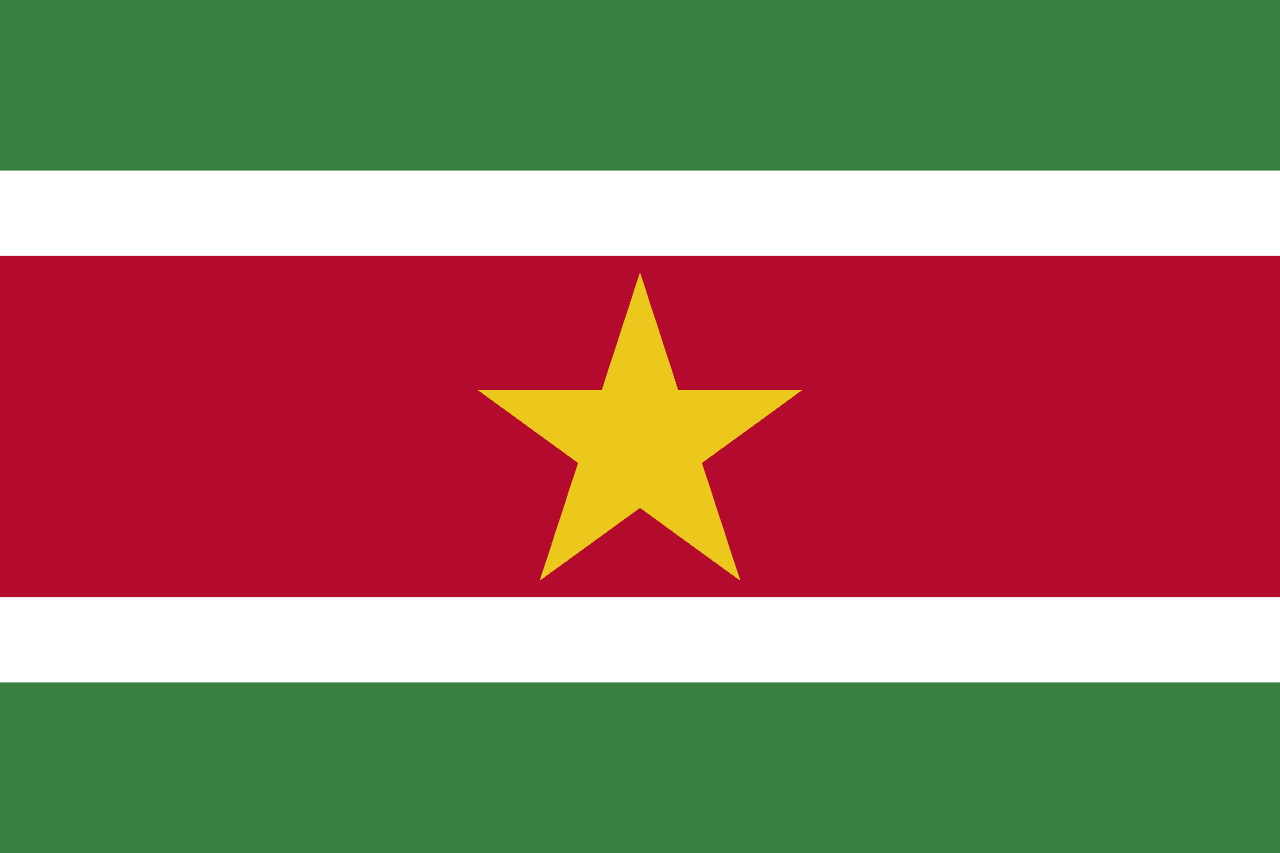
Suriname is South America's most overlooked country — a small, rainforest-covered nation on the Atlantic coast that was once a Dutch colony and remains today a Dutch-speaking outlier in a continent where Spanish and Portuguese dominate. That peculiarity is precisely its appeal: Suriname has its own identity, a multilingual culture built from African, South Asian, Javanese, Indigenous and European threads, and a vast interior of Amazon jungle that few travellers ever reach.
Paramaribo, the capital, sits on the Suriname River and is the unlikely centrepiece of a UNESCO World Heritage listing. Its historic inner city — wooden colonial buildings painted in Dutch reds, yellows and whites, with jalousied windows and iron railings — is one of the Americas' best-preserved colonial streetscapes. The downtown area sits around Onafhankelijkheidsplein (Independence Square), where the neo-classical Presidential Palace faces a green flanked by 19th-century wooden buildings. A short walk takes you from a Dutch Reformed church to a mosque to a synagogue to a Hindu temple — all within a few hundred metres, all actively used.
The Javanese community, descended from contract labourers brought by the Dutch from Indonesia between 1890 and 1939, gives Suriname an unexpected culinary dimension. Bakmi (noodle soup), chicken satay and gado-gado are prepared from family recipes brought from Java and served in roadside warungs around Paramaribo. It is the only place in South America where you can eat authentic Indonesian food.
Surinamese-Creole cuisine — rooted in the traditions of formerly enslaved African communities — produces pom (a root vegetable dish baked with chicken), peanut soups, and grilled freshwater fish. Roti, brought by Hindustani communities from South Asia, is now a national staple, stuffed with curried potato, chickpeas and eggs.
The interior — roughly 80% of the country — is tropical rainforest, some of the most intact in the Western Hemisphere. The Central Suriname Nature Reserve protects nearly 1.6 million hectares of pristine Amazonian forest with minimal human impact. Jaguar, tapir, giant anteater, eight species of monkey, harpy eagle and hundreds of bird species inhabit these forests. The Maroon communities who live in the interior — descendants of escaped enslaved people who built free societies deep in the jungle during the colonial period — maintain distinct cultures, languages and traditions. Visits to Maroon villages along the Suriname and Saramacca rivers are arranged through local guides and offer respectful insight into communities that preserved their identity through extraordinary determination.
Brownsberg Nature Park, just a few hours from Paramaribo, offers accessible jungle lodges, waterfalls and wildlife viewing including caiman, toucan and piranha. The Brokopondo Reservoir — one of the world's largest by surface area — reflects forest and sky across an inland sea created when a dam was built in the 1960s.
For birdwatchers, Suriname is exceptional. The country's combination of coastal wetlands, savanna and tropical forest creates habitat diversity that supports nearly 700 bird species. Scarlet ibis colonies in the Commewijne River mangroves create flashes of brilliant red against green water at dusk.
Suriname is not a mainstream destination. Tourism infrastructure is modest, costs can be higher than neighbours due to limited scale, and getting around the interior requires planning. But for travellers who value authenticity over comfort, few places in South America deliver a richer and more surprising experience.
Dutch colonial heritage, Indonesian food, Maroon jungle culture and Amazonian wilderness — Suriname is genuinely one of a kind.