Turkmenistan: The Eternal Flame, the Carpet Culture and the Closed Country
🌐 Translate:
The Darvaza gas crater — the Door to Hell — is a natural gas field that collapsed into a crater approximately 70 metres wide in 1971. Soviet engineers, believing the gas would burn off quickly, set it on fire to prevent methane from spreading. It has been burning continuously since. The flames rise metres above the rim of the crater, lighting the surrounding Karakum Desert in an orange glow at night that is visible from kilometres away. Turkmenistan's government announced in 2022 that it would extinguish the fire. The announcement received global attention. The fire is still burning.
Turkmenistan is one of the world's most closed countries — foreign visitors require visas that are difficult to obtain, freedom of movement is restricted, and the government maintains tight control over information and daily life. The country's first post-Soviet president, Saparmurat Niyazov, who called himself Turkmenbashi — Father of all Turkmen — renamed months after himself and his mother, banned opera and ballet as un-Turkmen, and erected a 12-metre gold-plated rotating statue of himself that faced the sun. His successor has been considerably less eccentric.
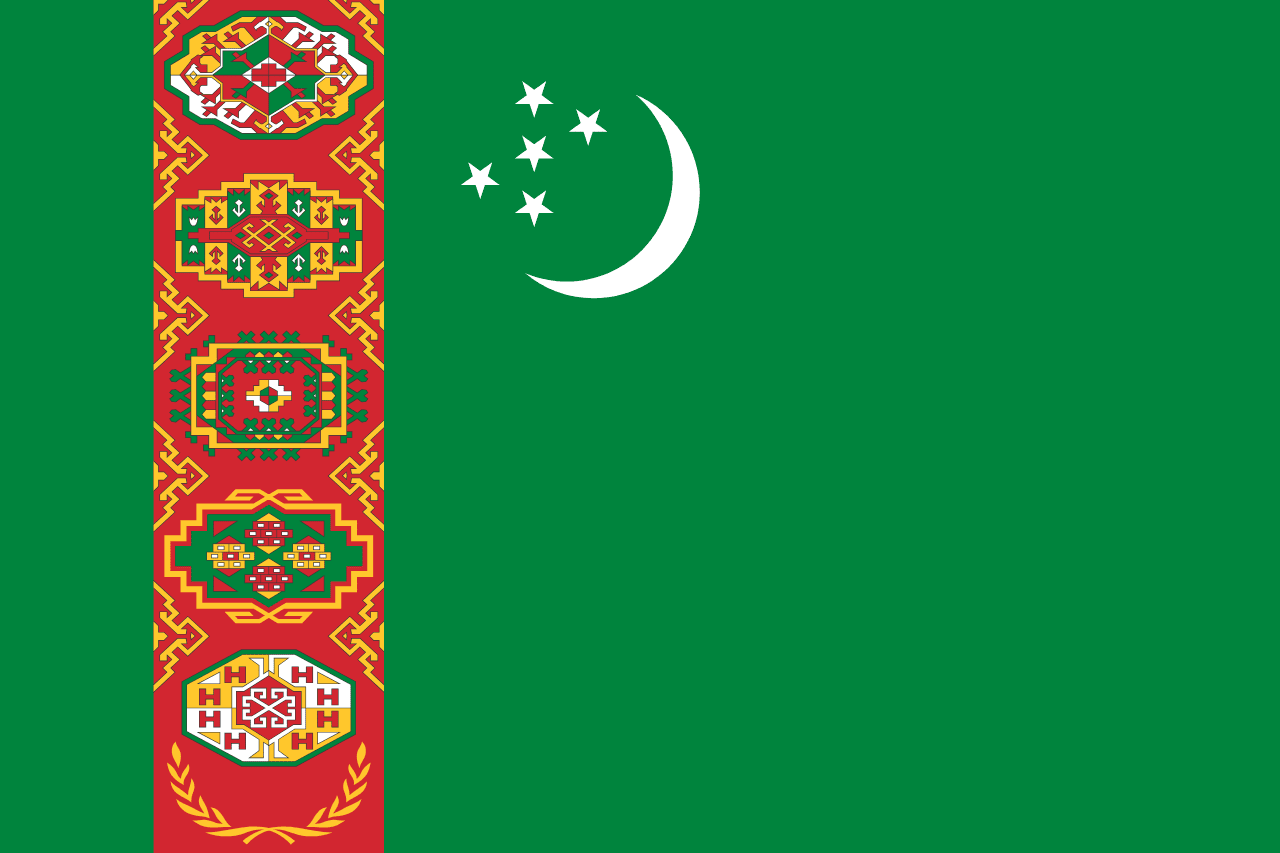
Turkmen carpet weaving is among the world's great textile traditions — the deep red geometric carpets of the Tekke and Yomut tribes, woven on horizontal looms using a technique involving a specific double-weft knot that produces exceptional density and durability, are recognised globally as the Bukhara carpet even though they are more correctly Turkmen. The carpet appears on the national flag. A museum in Ashgabat claims to house the world's largest handmade carpet.