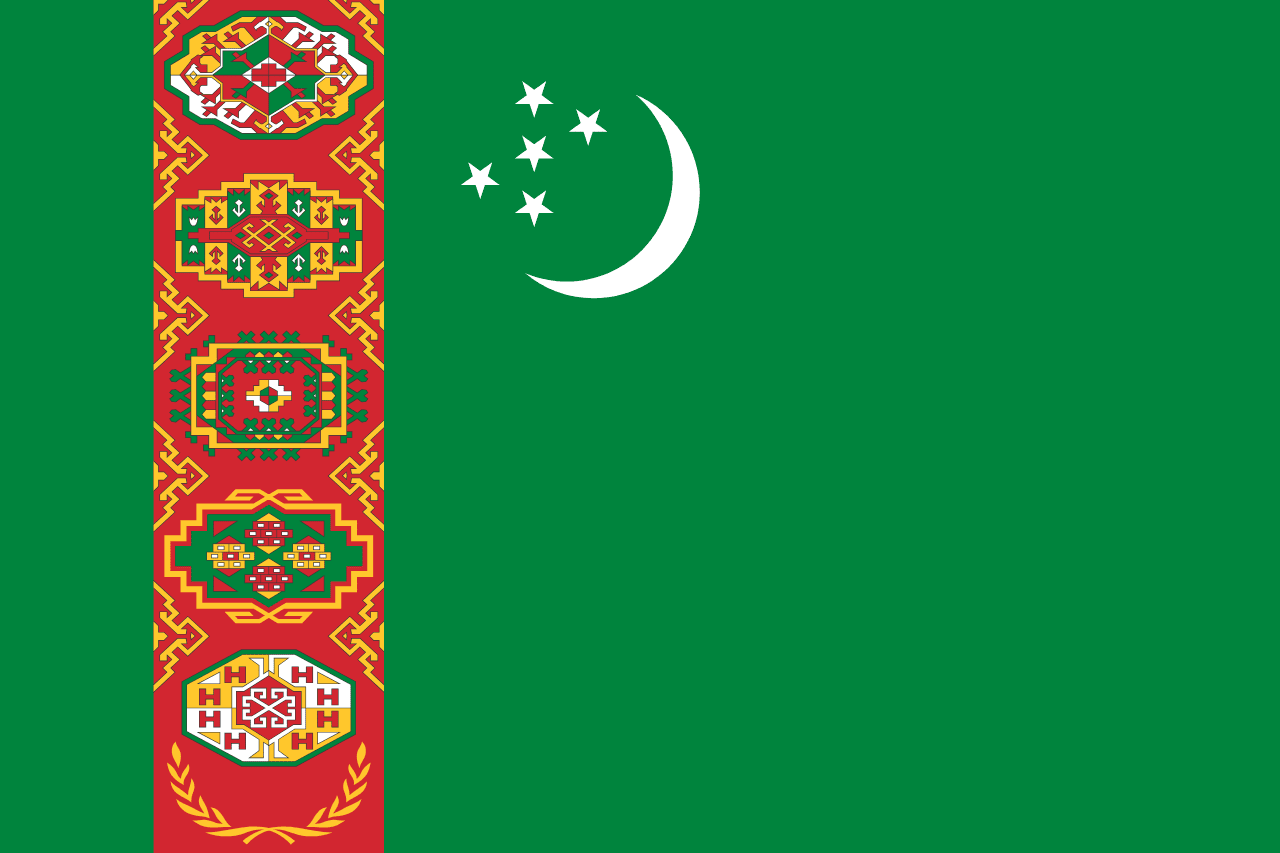
Turkmenistan is one of the most isolated and least visited countries in the world — a vast, authoritarian state in the heart of Central Asia where 80% of the land is covered by the Karakum Desert, where the government controls almost every aspect of daily life, and where tourism is deliberately limited. And yet it contains one of the most jaw-dropping natural phenomena on Earth, two magnificent ancient Silk Road cities, and a surreal national personality cult that makes it simultaneously disturbing and fascinating.
The Darvaza gas crater — known informally as the Door to Hell — is the single most astonishing feature in Turkmenistan and one of the most remarkable sights in the world. When Soviet geologists drilled into what appeared to be a promising gas field in 1971, the ground collapsed into a crater roughly 70 metres wide and 30 metres deep. To prevent toxic gas escaping, they set it alight, expecting it to burn out in weeks. It is still burning. The crater glows orange against black desert sky, its walls dripping fire, its pit radiating heat you can feel from 50 metres away. Standing at the edge at night, watching the gas flame from hundreds of cracks and fissures, with the Karakum desert stretching silent and dark in every direction, is a deeply strange experience that stays with every visitor.
Merv, near the town of Mary, is a UNESCO World Heritage Site and one of the most important sites on the ancient Silk Road. At its peak in the 12th century, it was one of the world's largest cities, with a population estimated between 200,000 and 500,000. The Mongol invasion of 1221 destroyed it almost completely. What remains — the Sultan Sanjar mausoleum with its restored turquoise dome, the outer walls of multiple city layers spanning millennia, and the vast emptiness of a once-great metropolis — gives a powerful sense of civilisational rise and fall.
Kunya-Urgench, further north near the Uzbek border, was the capital of the medieval Khwarezm kingdom. Its collection of Islamic monuments — minarets, mausoleums and towers in finely worked brick with glazed tile detail — is another UNESCO-listed concentration of architectural achievement in an almost completely unvisited setting.
Ashgabat, the capital, is the strangest city in the world. After independence from the Soviet Union in 1991, the country's eccentric first leader Saparmurat Niyazov rebuilt it largely in white marble — it holds a Guinness World Record for the most white marble-clad buildings in a single city. Giant gold statues of him stood throughout the city, including a rotating one always pointing toward the sun. He renamed months of the year after himself and members of his family. His successor continued the monumental building programme. The result is an enormous city of empty boulevards, gold-domed government buildings and fountains in a desert, with an eerie absence of street life — citizens stay indoors or use private transport rather than walking in public.
Getting into Turkmenistan requires either a tourist visa (rarely granted independently) or a transit visa. Most visitors join organised tours or use specialist agencies who navigate the complex permission requirements. A local guide is mandatory.
For travellers drawn to the world's edges — places where geopolitics, geography and human absurdity combine into something genuinely unique — Turkmenistan is unmatched. You will not see anything else like it.