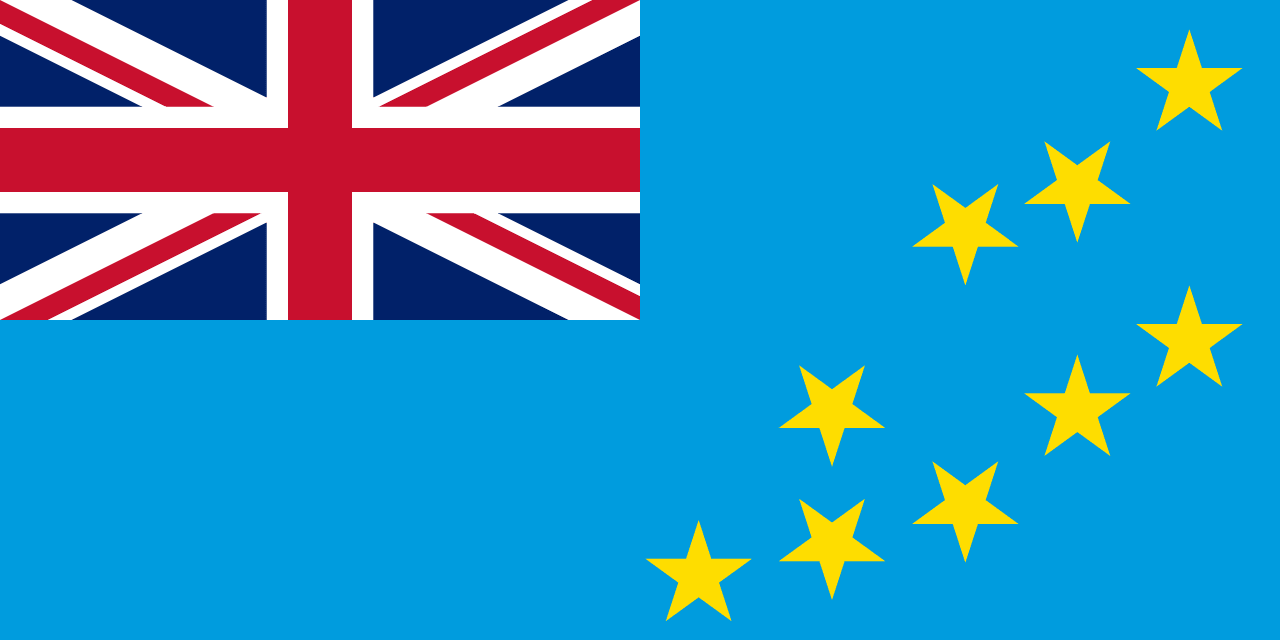
Tuvalu is one of the world's smallest and most remote nations — nine coral atolls and reef islands scattered across the central Pacific Ocean with a total land area of just 26 square kilometres and a population of around 11,000 people. Getting there is genuinely difficult: a twice-weekly flight from Fiji is the primary connection to the outside world. There are no luxury resorts, no tourist infrastructure, no Instagram crowds. What Tuvalu has instead is something increasingly rare: pristine Pacific ocean culture, coral that has not been damaged by mass tourism, and the deeply human story of a people who may be among the first to lose their home to rising seas.
Funafuti, the main island and capital, is a narrow strip of land in a vast lagoon. The town sits on one side, facing the lagoon; the other side faces the open ocean. In storm season, waves from the Pacific wash directly across the island — there is nowhere on Funafuti that is more than a few hundred metres from the water on either side. The vulnerability is physical and immediate, not abstract.
The Funafuti Atoll lagoon is one of the Pacific's great natural features: a body of water roughly 50 kilometres long and 30 kilometres wide enclosed by a ring of reef and islets called motus. Boat trips across the lagoon to uninhabited motus take visitors to sand spits with absolute isolation — white sand, coconut palms, green lagoon water and open Pacific horizon, with nothing else in any direction. Swimming and snorkelling on the reef around these motus is excellent, the coral largely intact and the fish life dense with species rarely seen elsewhere.
Tuvaluan culture is rooted in the traditions of the Polynesian ancestors who navigated to these islands centuries ago. Fatele — a traditional dance form combining song, rhythmic arm movements and collective participation — is central to Tuvaluan social life. Performances at community events are welcoming, participatory and a window into a culture that has maintained continuity across vast distances of time and water.
The connection to the ocean is total. Fishing is not a hobby but a daily practice: canoe fishing, net fishing and spearfishing provide food and income. The lagoon is used for swimming, boat travel and the movement of daily life. Children learn to navigate it before they learn to read. Understanding Tuvalu means understanding what it means to live on water, surrounded by water, dependent on water, and now threatened by it.
Climate change is the framework within which any visit to Tuvalu occurs. The country has made its vulnerability a platform for international diplomacy — Tuvaluan leaders have spoken at the UN from inside the sea to illustrate what rising ocean levels mean in practice. The country has signed agreements with New Zealand and Australia allowing citizens to move abroad. What was once an abstract threat is now an existential timetable.
Visiting Tuvalu is not a conventional holiday. There is no poolside cocktail culture, no beach resort infrastructure, no guided excursion industry. What there is is genuine hospitality, genuine ocean, and the extraordinary experience of being in a place so remote and so seriously human that it changes your sense of what the world is made of.
Those who make the effort to reach Tuvalu carry it with them long after they leave — not as a memory of comfort, but as a memory of something essential.