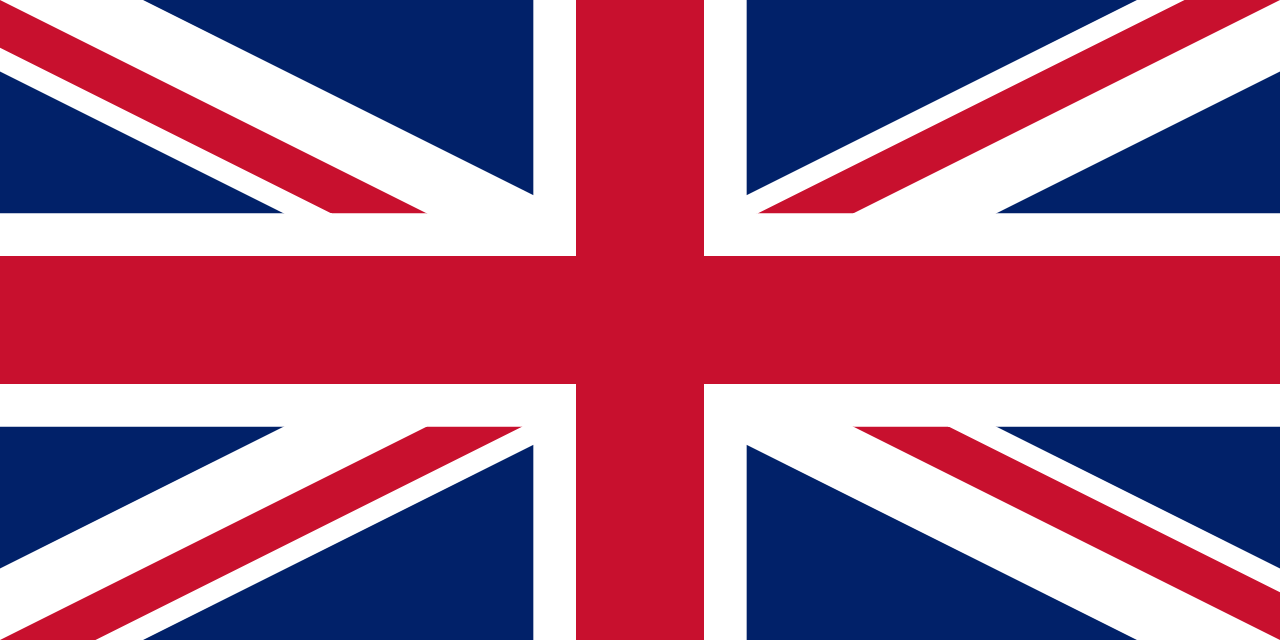
The United Kingdom is four countries in one — England, Scotland, Wales and Northern Ireland — sharing an island and a government while maintaining distinct languages, landscapes, traditions and identities that make touring the UK a genuinely varied experience. Add to this one of the world's great capital cities, the English countryside that defined landscape painting, the Scottish Highlands that defined the idea of wild beauty, a pub culture without parallel, and a literary, musical and scientific inheritance that shaped the modern world, and the case for visiting becomes almost embarrassingly strong.
London is one of the world's two or three greatest cities and earns that status through an extraordinary concentration of free world-class institutions, multilayered history and sheer urban energy. The British Museum holds humanity's greatest collection of global artefacts — the Rosetta Stone, the Elgin Marbles, Egyptian mummies, Mesopotamian reliefs — all freely accessible. The National Gallery covers Western European painting from the 13th century to the Post-Impressionists. The Tate Modern in a converted power station on the South Bank contains one of the world's finest collections of modern and contemporary art. None of these charge admission.
Beyond the museums, London operates as a city of villages: Shoreditch's art and food scene, Notting Hill's Victorian terraces and carnival energy, Greenwich's maritime history and observatory, Borough Market's extraordinary food hall, Brick Lane's curry mile and bagel culture, Hampstead Heath's 800 acres of open space above a skyline. Westminster, the Tower of London, Buckingham Palace, Kew Gardens — the classic attractions justify the queues.
Oxford and Cambridge are within an hour of London — university towns of medieval courts, punting on rivers under willow trees, and architecture that concentrates several centuries of scholarly investment into a few walkable square kilometres. Stratford-upon-Avon, Shakespeare's birthplace, sits in the Cotswolds — a landscape of honey-stone villages, dry-stone walls and gentle hills that represent the most idealised version of English countryside.
Scotland is a different proposition entirely. Edinburgh, the capital, climbs its volcanic rock in layers: the medieval Old Town dominated by the castle, the elegant Georgian New Town grid below it, and Arthur's Seat — an extinct volcano in a royal park — giving the city a dramatic skyline unique in Europe. The Edinburgh Festival in August is the world's largest arts event, filling every theatre, pub and street corner with performance.
The Scottish Highlands are Britain's true wilderness. Ben Nevis, the highest point in the British Isles, the Cairngorms plateau with its Arctic species, the Outer Hebrides with their white sand beaches and Gaelic language, Glencoe's black-walled glacial valley and the drive through Wester Ross — this is landscape that feels genuinely primeval. Loch Ness, Eilean Donan Castle and the whisky distilleries of Speyside are the familiar names in a region that gives generously beyond them.
Wales has its own language — Cymraeg is spoken by around 800,000 people and its road signs are bilingual — its own national parks (Snowdonia, Brecon Beacons), its own literary and musical traditions, and a castle-per-capita ratio that makes medieval history unavoidable. Northern Ireland's Giant's Causeway, the Antrim coast and Belfast's Titanic Quarter complete a UK that genuinely spans from subtropical gardens in Cornwall to sub-Arctic peaks in the Cairngorms.
The pub is the UK's original social institution: a room where class dissolves, strangers talk and standing orders a round for the table remains a form of social contract. It is not something you can fully understand from outside. You have to go in.